
Featured Spatial Multi-Omics Solutions
Bridging targeted 16S hypervariable profiling with high-resolution spatial transcriptomics pipelines to unlock intact host-pathogen microenvironments.




Commercial Landscape: Coupling 16S Hypervariable Regions with Spatial Transcriptomics
In the rapidly modernizing biotechnology marketplace, the confluence of targeted 16S hypervariable region amplification and high-throughput spatial transcriptomics has unlocked an unprecedented paradigm for life science marketing, preclinical drug development, and clinical biomarker diagnostics. Historically, microbiome characterization and spatial tissue transcriptomics operated within isolated scientific domains. Bulk 16S amplicon sequencing (interrogating regions V1-V3, V3-V4, or the full-length V1-V9 cistron) historically necessitated total tissue homogenization. While this yielded deep taxonomic quantitative inventories, it permanently erased the histological geography and physical compartmentalization of microbial niches. Concurrently, standard spatial transcriptomics protocols traditionally focused purely on eukaryotic polyadenylated mRNA capture, rendering prokaryotic non-polyadenylated 16S rRNA transcripts invisible within spatial gene expression libraries.
The commercial market is now experiencing an exponential inflection point. Driven by multi-omics integration and demand from biopharmaceutical enterprises, the market valuation for spatial biology platforms is expanding at a CAGR exceeding 22%, while microbiome therapeutics and diagnostics are rapidly maturing toward billion-dollar valuations. The strategic marriage of targeted 16S hypervariable probes onto spatially barcoded arrays (such as the BMKMANU S3000 platform) enables life science leaders to map the host-microbiome interactome at near-single-cell and subcellular spatial resolutions. Life science enterprises, diagnostic laboratories, and academic core facilities are actively seeking validated end-to-end services that can co-localize bacterial taxa directly against host inflammatory response signatures within intact formalin-fixed paraffin-embedded (FFPE) or fresh-frozen (FF) clinical specimens.
Pharmaceutical Discovery
Global biopharma utilizes spatial 16S hypervariable deconvolution to evaluate drug-microbiome metabolic interfaces, target validation, and the local intratumoral microbiome's role in drug resistance against immunotherapies.
Onco-Microbiome Profiling
Mapping targeted hypervariable fingerprints across tumor cores, invasive margins, and tertiary lymphoid structures, identifying immunosuppressive bacterial micro-niches that modulate cancer prognosis.
Clinical Diagnostics & AI
Integrating algorithmic cloud pipelines with high-throughput sequencing infrastructures to build predictive diagnostic classifiers based on tissue-resident bacterial localization and host gene co-expression.
Hypervariable Region Dynamics (V1-V9) in Spatial Capture Arrays
The bacterial 16S ribosomal RNA gene encompasses approximately 1,500 base pairs, consisting of nine conserved regions interspersed with nine variable regions (V1 through V9). The thermodynamic efficiency and specificity of capturing these hypervariable regions within a planar spatial transcriptomic framework introduce unique technological nuances that directly impact market adoption and analytical precision.
Optimizing V-Region Amplification Within Tissue Permeabilization
Spatial capture arrays utilize spatially barcoded poly-dT and tailored capture probes anchored onto glass substrates. While host eukaryotic mRNAs naturally hybridize via their poly-A tails, 16S rRNA molecules require specialized targeted spatial oligonucleotide probes directed at conserved regions flanking key hypervariable sequences.
The V3-V4 region remains the most widely marketed target for short-read sequencing due to its comprehensive taxonomic database representation (SILVA, Greengenes, NCBI). However, spatial permeabilization kinetics present sterical barriers. In thick tissue sections, shorter amplicons spanning the V4 region (approx. 250 bp) maximize in situ capture efficiency and minimize diffusion artifacts across spatial capture spots.
Conversely, when high-resolution strain-level discrimination is demanded, full-length V1-V9 sequencing utilizing long-read technology (PacBio Sequel IIe / Revio and Oxford Nanopore PromethION) represents the bleeding edge. By pairing long-read sequencing with spatial barcodes, researchers overcome the taxonomic ambiguity inherent in partial V-region amplicons, resolving commensal from pathogenic species at exact morphological coordinates.
Technical Challenges Solved by BMKGene
- ✔ Mitochondrial/Chloroplast Cross-Reactivity: Elimination of eukaryotic organellar 16S background using proprietary blocking peptide nucleic acids (PNAs) during spatial hybridization.
- ✔ Spatial Lateral Diffusion Suppression: Controlled permeabilization buffers ensuring microbial RNA does not drift across adjacent micro-wells or capture spots.
- ✔ Dual-Omics Barcode Integration: Harmonized library construction simultaneously reading spatial host poly-A cDNAs and microbial 16S hypervariable spatial amplicons.
- ✔ Bioinformatic Alignment Rigor: Customized spatial mapping algorithms within BMKCloud linking operational taxonomic units (OTUs/ASVs) with spatial host tissue clusters.
Deep-Dive Application Scenarios: Commercializing Spatial Metatranscriptomics
From translational oncological therapies to mucosal immunological formulations and agrigenomic engineering, spatial 16S profiling provides the geographic context that traditional bulk amplicon sequencing completely misses.
1. Intratumoral Oncology
Intratumoral bacteria, such as Fusobacterium nucleatum in colorectal cancer and intracellular microbes in breast tumors, selectively reside in necrotic and immunosuppressive domains. Spatial 16S mapping proves whether bacteria actively trigger local CD8+ T-cell exhaustion or recruit myeloid-derived suppressor cells (MDSCs), providing crucial companion diagnostic validation for novel onco-microbiome therapies.
2. Mucosal Immunology & IBD
In Inflammatory Bowel Disease (Crohn's and Ulcerative Colitis), the breakdown of the intestinal mucus barrier allows direct bacterial invasion into the lamina propria. Spatial transcriptomics pinpoint the exact bacterial families crossing the epithelial boundary, directly matching mucosal transcriptomic upregulation of pro-inflammatory cytokines (IL-17, TNF-alpha) to specific bacterial niches.
3. Dermatology & Cosmetics
The cutaneous microbiome demonstrates micro-spatial stratification across hair follicles, sebaceous glands, and the stratum corneum. Cosmeceutical developers utilize spatial hypervariable profiling to demonstrate how probiotic lotions or therapeutic peptides modulate Cutibacterium acnes phylotypes in intact dermal architecture without inducing localized inflammatory flares.
4. Plant Rhizosphere Biology
Understanding endophyte colonization and root nodule nitrogen fixation demands high-resolution spatial biology. By probing 16S variable loops along the root cross-section, agrigenomics companies track beneficial bio-fertilizer strains, evaluating how root tissue upregulates drought resistance and pathogen-defense transcripts at the colonization boundary.
Biomarker Technologies (BMK)
Biomarker Technologies (BMKGene), founded in 2009, is a leading genomics service provider with over 16 years of continuous innovation in high-throughput sequencing and bioinformatics. Backed by more than 60 national invention patents and 200+ software copyrights, we deliver comprehensive multi-omics solutions—spanning genomics, metagenomics, epigenetics, single-cell omics, transcriptomics, and our proprietary BMKMANU S3000 spatial transcriptome technology—supported by our advanced BMKCloud bioinformatics platform. We have established long-term collaborations with organizations across 84 regions worldwide, providing reliable genomic solutions on a global scale.
Our profound experience in microbiome sequencing—spanning over a decade of PacBio full-length amplicon and metagenomic service delivery—positions BMKGene as the premier global provider capable of orchestrating complex 16S hypervariable targeted capture within spatial transcriptomic projects.
BMKGene Core Competencies
Global Network: Serving scientists and commercial partners across 84 regions worldwide.
Proprietary Spatial Innovation: BMKMANU S3000 provides large-field, high-resolution spatial transcriptomics capable of simultaneous host mRNA and targeted amplicon interrogation.
Intellectual Property: 60+ National Invention Patents & 200+ Software Copyrights safeguarding client data and methodology.
Automated Delivery: Standardized SOPs from tissue receipt to final bioinformatics visualization on BMKCloud.
Our Platforms & Laboratory Infrastructure
World-class sequencing instrumentation, automated biomolecular facilities, and petabyte-scale cloud computing pipelines.

Multi-Level Sequencing Fleets
PacBio platforms: Sequel II, Sequel, RSII
Nanopore platforms: PromethION P48, GridION X5 MinION
10X Genomics: 10X ChromiumX, 10X Chromium Controller
Illumina platforms: NovaSeq
BGI-sequencing platforms: DNBSEQ-G400, DNBSEQ-T7
Bionano Irys system
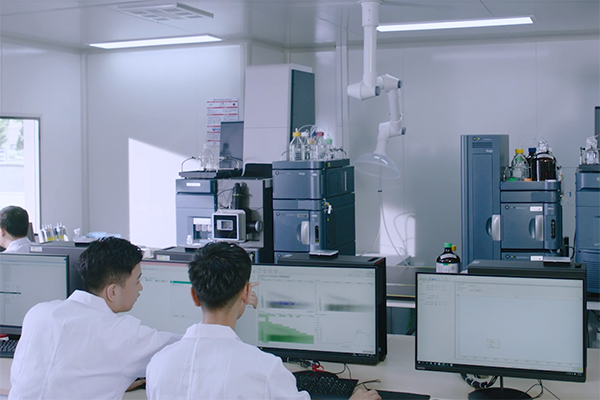
Waters XEVO G2-XS QTOF
QTRAP 6500+

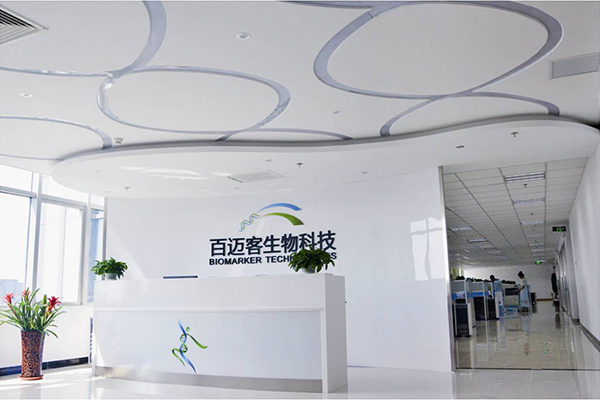
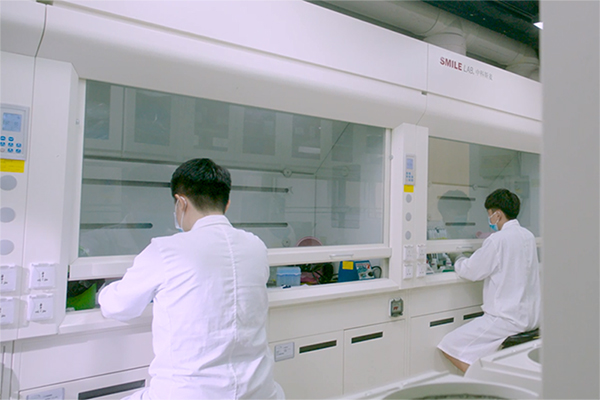
Over 20,000 Square Feet Facility
Advanced biomolecular laboratory instruments.
Standard labs of sample extraction, library construction, clean rooms, sequencing labs.
Standard procedures from sample extraction to sequencing under strict SOPs ensuring absolute reproducibility.

BMKCloud Bioinformatic Engine
Self-developed BMKCloud bioinformatics platform.
CPUs with 41,104 memory and 3 PB total storage.
4,260 computing cores with peak computing power over 121,708.8 Gflop per second, accelerating complex spatial multi-omics deconvolution.
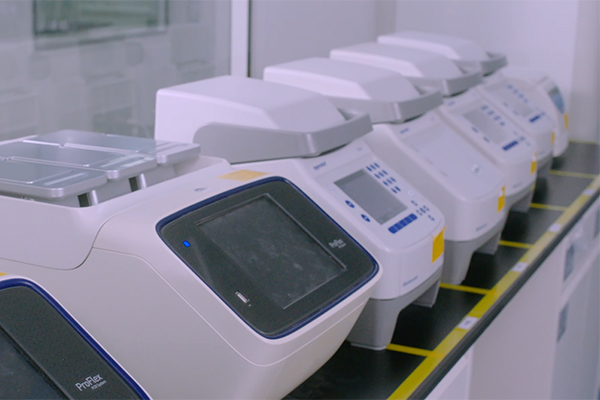
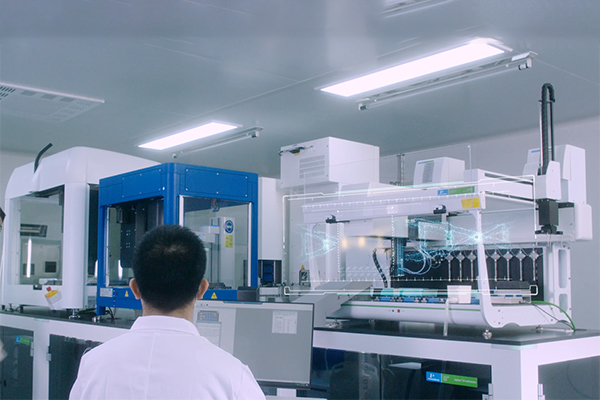
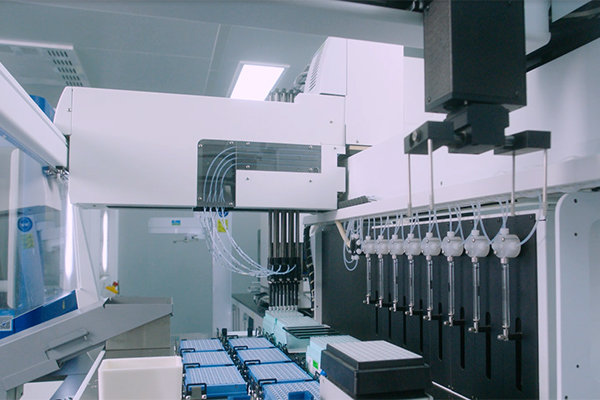
Fully Automated NGS Platform — Brilliant Lab 1000
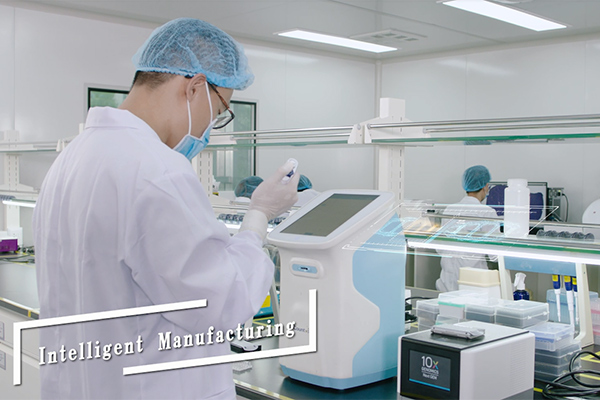
Biomarker technologies (BMKGENE) and PerkinElmer have jointly built a fully automated experimental production line, called Brilliant Lab 1000 (BL1000), which is applied to the high-throughput NGS library construction service. BMKGENE strives to greatly improve the entire line of sequencing products in terms of product types, production line throughput, delivery quality, and cycle time, to provide customers with better sequencing services.
Unrivaled High-Throughput Automation
The BL1000 system completely eliminates human pipetting variance, guaranteeing hyper-consistent library yield and fragment length profiles. When capturing sensitive 16S hypervariable amplicons alongside spatial transcriptomics cDNA from delicate histological sections, automated liquid handling safeguards sample integrity and avoids batch-to-batch library preparation artifacts.
By scaling this high-throughput pipeline, BMKGene shortens turnaround times to unprecedented industry benchmarks, empowering global commercial sponsors to progress from tissue biopsy to publication-ready spatial host-microbial datasets within compressed operational timelines.
State-of-the-Art Factory & Automated Facilities


Enterprise Qualifications & Intellectual Property
Our rigorous international certifications, joint academician laboratories, and intellectual property portfolios validate our scientific authority in spatial multi-omics and microbial genetics.


Key Patents & Bioinformatics Software Copyrights


Future Horizons: Subcellular Resolution & AI-Driven Spatial Deconvolution
As the spatial biology industry advances, market requirements are migrating from multi-cellular spot diameters (e.g., 55 μm) to subcellular resolutions (down to 0.5 μm - 10 μm). In the context of 16S hypervariable region profiling, subcellular spatial indexing is transformative. Bacterial cells generally range between 0.5 μm to 5 μm in dimension; hence, submicron capture arrays can isolate individual microbial bodies residing inside eukaryotic phagosomes, extracellular matrix networks, or within mucosal crypt microstructures.
Algorithmic Spatial Deconvolution (BMKCloud)
Because complex tissues feature overlapping cellular morphologies, computational bioinformatic deconvolution is mandatory. BMKGene utilizes Bayesian probabilistic frameworks and Graph Neural Networks (GNNs) on our 4,260-core BMKCloud infrastructure to decompose spatial capture spots containing both human transcripts and bacterial 16S amplicon reads. This reconstructs single-cell host-microbe spatial matrices, assigning precise bacterial abundances directly to specific immune, stromal, or tumor cell subtypes.
Clinical Trial Biomarker Stratification
The next frontier in spatial marketing involves prospective companion diagnostics for checkpoint blockades (Anti-PD-1/PD-L1). Pharmaceutical trials increasingly measure spatial co-localization coefficients between specific 16S hypervariable signatures (such as Bifidobacterium or Akkermansia muciniphila) and tertiary lymphoid structure (TLS) maturation, establishing actionable histological stratification markers that predict therapy responders.
For inquiries about our products or pricelist, please leave your email to us.
We will be in touch within 24 hours.
Comprehensive Genomic Product Portfolio
Explore our foundational sequencing services powering spatial transcriptomics, metagenomics, and chromosomal genome assemblies worldwide.


