Pioneering Multi-Omics Technologies


The Swiss Microbiome Frontier: Commercial & Academic Excellence
Switzerland stands as a global powerhouse for life sciences, biotechnology, and precision medicine. Across key innovation hubs—from the Basel pharma cluster and Zurich's academic ecosystems to the Lake Geneva region (Health Valley)—researchers are increasingly leveraging 16S rRNA gene sequencing to unlock the secrets of microbial communities.
With world-class institutions like ETH Zurich, EPFL, and the University of Basel spearheading microbiome initiatives, the demand for precise, high-throughput metagenomic solutions has surged. Swiss biotechnology companies, agricultural research stations (such as Agroscope), and clinical laboratories rely heavily on 16S rRNA sequencing to explore bacterial diversity, monitor ecosystem health, and develop targeted therapies.
As precision medicine transitions from general diagnostics to individualized therapies, characterizing the human gut microbiome has become a primary target. High-resolution 16S sequencing allows Swiss researchers to establish critical biomarkers, contributing significantly to clinical trials, food science, and environmental conservation.

Key Localized Application Scenarios
Clinical Research & Gut Health
Swiss hospitals and research centers utilize 16S rRNA sequencing to investigate the role of the gut microbiome in inflammatory bowel diseases, metabolic disorders, and immunotherapy efficacy. Partnering with global sequencing leaders enables local scientists to accelerate clinical trials with standardized, reliable data.
Agricultural & Food Innovation
From monitoring the fermentation processes of traditional Swiss dairy and cheese products to analyzing soil microbiomes for sustainable agriculture, 16S sequencing plays a vital role in food safety, quality control, and agricultural productivity across Swiss cantons.
Environmental & Alpine Ecology
The pristine Swiss Alpine environment is highly sensitive to climate change. Researchers study microbial communities in alpine soils, lakes, and glaciers using high-resolution sequencing to track biodiversity shifts and environmental health indicators over time.
Evolving Industry Trends: Full-Length 16S Sequencing
Traditionally, 16S rRNA gene sequencing targeted specific hypervariable regions (e.g., V3-V4) using short-read sequencing platforms like Illumina. While highly cost-effective and accurate, this approach often limits taxonomic resolution to the genus level.
Today, the industry is shifting towards Full-Length 16S rRNA Gene Sequencing, driven by long-read platforms such as PacBio (Sequel II) and Oxford Nanopore. By sequencing the entire ~1500 bp region of the 16S gene, researchers can achieve species-level and sometimes strain-level resolution. This breakthrough is particularly crucial for clinical diagnostics and complex environmental samples where precise species identification is paramount.

The Multi-Omics Integration
Another notable trend in Switzerland is the integration of 16S sequencing with other omics technologies, such as transcriptomics and spatial biology. Understanding *who* is there (16S metagenomics) is now coupled with *what they are doing* (metatranscriptomics) and *where they are located* (spatial transcriptomics), providing a holistic view of biological systems.
Biomarker Technologies (BMKGene) is at the forefront of this integration, offering comprehensive services that span from DNA extraction to advanced bioinformatics on our proprietary BMKCloud platform.
Biomarker Technologies (BMK)
Biomarker Technologies (BMKGene), founded in 2009, is a leading genomics service provider with over 16 years of continuous innovation in high-throughput sequencing and bioinformatics. Backed by more than 60 national invention patents and 200+ software copyrights, we deliver comprehensive multi-omics solutions—spanning genomics, metagenomics, epigenetics, single-cell omics, transcriptomics, and our proprietary BMKMANU S3000 spatial transcriptome technology—supported by our advanced BMKCloud bioinformatics platform. We have established long-term collaborations with organizations across 84 regions worldwide, providing reliable genomic solutions on a global scale.

Our Leading Sequencing & Bioinformatic Platforms
Multi-Level Platforms
PacBio platforms: Sequel II, Sequel, RSII
Nanopore platforms: PromethION P48, GridION X5, MinION
10X Genomics: 10X ChromiumX, 10X Chromium Controller
Illumina platforms: NovaSeq
BGI-sequencing platforms: DNBSEQ-G400, DNBSEQ-T7
Bionano Irys system
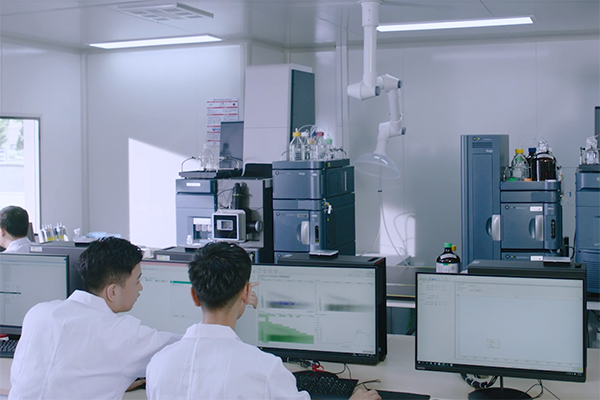
Waters XEVO G2-XS QTOF
QTRAP 6500+
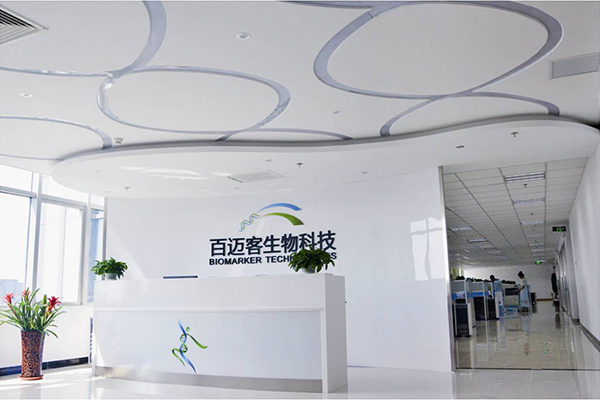
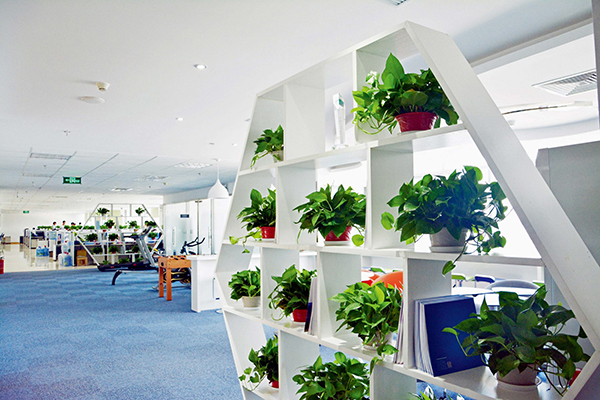
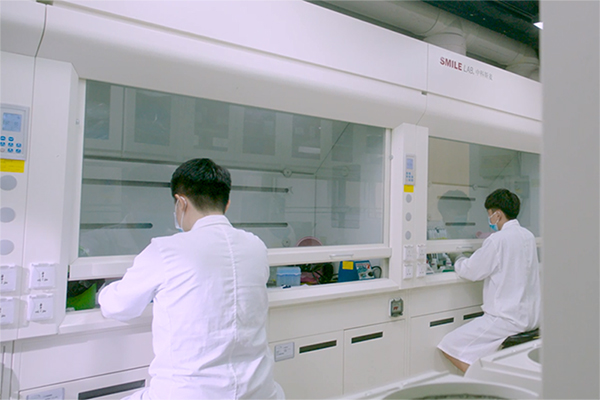
Over 20,000 Sq. Ft. Laboratory
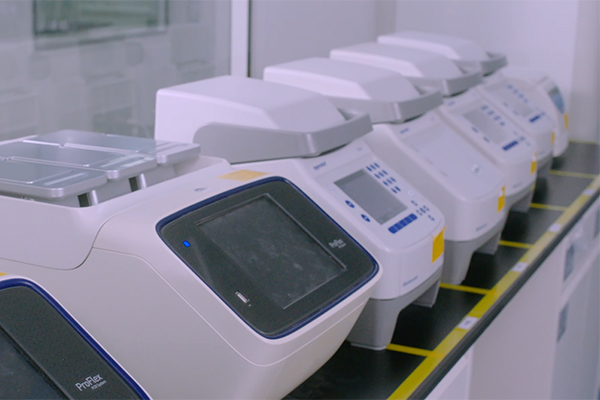
State-of-the-art biological laboratory instruments with advanced automation capabilities.
Standardized laboratories dedicated to sample extraction, library construction, clean rooms, and sequencing labs.
Strict standard operating procedures (SOPs) from raw sample extraction to final sequencing to ensure maximum data integrity.
BMKCloud Bioinformatics
Self-developed, easy-to-use online bioinformatic analysis platform designed for complex data sets.
Equipped with CPUs featuring 41,104 memory and 3 PB of total high-speed storage.
4,260 high-performance computing cores with peak processing power exceeding 121,708.8 Gflop per second.
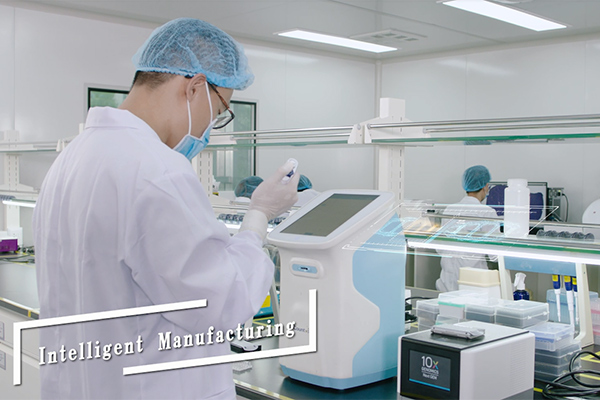
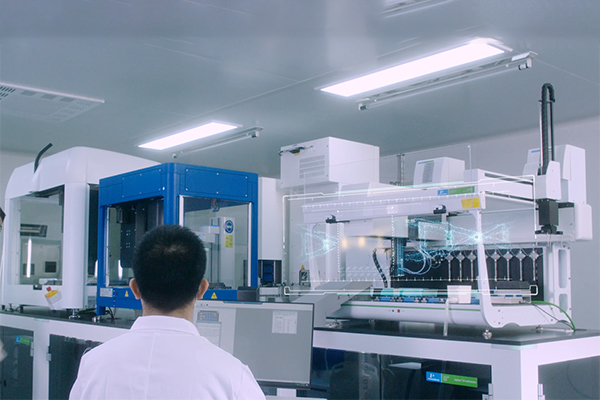
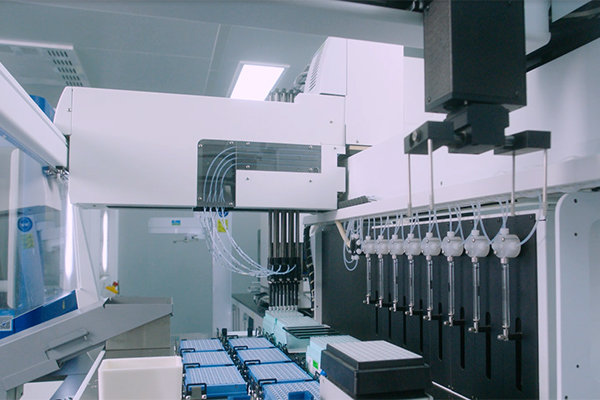
Fully Automated Platform: Brilliant Lab 1000
Biomarker Technologies (BMKGENE) and PerkinElmer have jointly built a fully automated experimental production line, called Brilliant Lab 1000 (BL1000), which is applied to high-throughput NGS library construction services.
BMKGENE strives to greatly improve the entire line of sequencing products in terms of product types, production line throughput, delivery quality, and cycle time, to provide Swiss and global customers with unmatched sequencing services.

Enterprise Qualifications & Academic Accreditations
Our commitment to quality is validated by international certifications, proprietary patents, and software copyrights, ensuring the highest standards of data accuracy and regulatory compliance.


Obtaining a Competitive Quote in Switzerland
When requesting a quote for 16S rRNA gene sequencing projects in Switzerland, several parameters should be considered to ensure the most accurate pricing and optimal experimental design:
- Sample Type & Extraction: Whether you require genomic DNA extraction services for challenging samples (e.g., Swiss soil, cheese, or clinical biopsies) or will provide pre-extracted DNA.
- Target Hypervariable Regions: Standard V3-V4 region sequencing using Illumina or full-length 16S sequencing utilizing PacBio/Nanopore platforms.
- Sequencing Depth: Standard depth (e.g., 30,000 to 50,000 reads per sample) for general profiling or deeper sequencing for rare taxa discovery.
- Bioinformatics Requirements: Basic OTU/ASV clustering and taxonomic classification, or advanced functional profiling and comparative statistics via BMKCloud.
Our Swiss-focused support team ensures seamless logistics, efficient sample shipping protocols compliant with local import regulations, and fast turnaround times.
For inquiries about our products or pricelist, please leave your email to us.
We will be in touch within 24 hours.
Inquiry Now