
Targeted Amplicon & Core Genomic Cooperation Products
Explore our flagship high-throughput sequencing and targeted extraction products engineered specifically to meet the high reproducibility and cost-performance standards of academic research groups.


Biomarker Technologies (BMK)
Biomarker Technologies (BMKGene), founded in 2009, is a leading genomics service provider with over 16 years of continuous innovation in high-throughput sequencing and bioinformatics. Backed by more than 60 national invention patents and 200+ software copyrights, we deliver comprehensive multi-omics solutions—spanning genomics, metagenomics, epigenetics, single-cell omics, transcriptomics, and our proprietary BMKMANU S3000 spatial transcriptome technology—supported by our advanced BMKCloud bioinformatics platform. We have established long-term collaborations with organizations across 84 regions worldwide, providing reliable genomic solutions on a global scale.
Within academic research, Amplicon Sequencing represents one of the most fundamental yet rapidly evolving pillars of modern genomics. From profiling intricate microbial ecosystems (16S/18S/ITS ribosomal RNA) to targeted disease biomarker validation and agronomic marker-assisted selection, our academic cooperation framework bridges scientific curiosity with industrial-grade high-throughput infrastructure.

Industrial Landscape & Technological Trends in Amplicon Sequencing
Examining how high-throughput targeted sequencing has shifted from simple taxonomic surveys to precision multi-omics integration, long-read full-length resolution, and high-density cohort studies.
1. The Transformation of Targeted Amplicon Sequencing in Academic Research
Amplicon sequencing, broadly characterized by the ultra-deep, PCR-targeted high-throughput sequencing of designated genomic loci, has undergone revolutionary shifts across the past two decades. Historically confined to short hypervariable regions (such as 16S rRNA V3-V4 for prokaryotes, 18S rRNA V4/V9 for microscopic eukaryotes, and ITS1/ITS2 for fungal taxonomy), amplicon sequencing has fundamentally redefined microbiome ecology, biodiversity cataloging, and environmental monitoring. In modern academic cooperation, amplicon sequencing is no longer merely a descriptive tool; it has transitioned into a quantitative, mechanistic, and high-resolution functional genomics platform.
Today, academic consortiums, global universities, and non-profit research institutes face unprecedented demands for ultra-large sample cohorts, cross-environment biodiversity surveys, and translational clinical insights. The emergence of automated library preparation, dual-indexing multiplexing strategies, and long-read single-molecule real-time (SMRT) sequencing has propelled amplicon analysis beyond genus-level identification toward species-level and strain-level distinction. Consequently, academic institutions require dependable industrial partners capable of delivering massive data output, rigorous quality controls, and compliant bioinformatics execution within tightly constrained grant deadlines.
Full-Length Resolution
Harnessing PacBio HiFi and Oxford Nanopore platforms to sequence entire 1.5 kb 16S, 2.5 kb 16S-ITS-23S operons, and complex fungal ITS regions without PCR fragmentation, eliminating taxonomic ambiguity at the species and strain level.
High-Density SLAF & Markers
Proprietary SLAF-seq (Specific-Locus Amplified Fragment Sequencing) and targeted resequencing protocols enabling high-throughput SNP discovery, genome-wide association studies (GWAS), and genetic linkage map construction.
Cloud-Native Analytics
Seamless execution via our self-developed BMKCloud computing infrastructure, powered by 4,260 computing cores and over 121,708 Gflops peak power for standardized, reproducible, and interactive academic data interpretation.
In-Depth Application Scenarios for Academic Cooperation
From environmental eDNA surveys to agronomic molecular breeding, explore how our amplicon sequencing services empower major academic disciplines with publication-ready insights.
1. Global Soil, Marine & Extreme Environment Microbiomics
Academic ecological studies investigate soil nutrient cycles, marine micro-eukaryote dynamics, and extreme habitat adaptations (e.g., deep-sea hydrothermal vents, permafrost, arid deserts). By combining multi-hypervariable 16S/18S amplicon assays with automated magnetic bead extraction, our academic cooperation pipeline reliably handles low-biomass and high-humic samples, yielding pristine amplicon libraries and unmasking rare operational taxonomic units (OTUs) and Amplicon Sequence Variants (ASVs).
2. Human Gut Microbiome & Clinical Translational Cohorts
Translational academic medical centers rely on ultra-high-throughput amplicon sequencing for prospective cohort studies, disease-microbiome associations (e.g., IBD, metabolic syndrome, neurodegenerative pathways), and drug response monitoring. Our robust standard operating procedures ensure negligible batch effects across thousands of longitudinal fecal or mucosal samples, delivering statistical power for biomarker discovery and multi-omics correlation.
3. Crop Rhizosphere Dynamics & Plant-Microbe Symbiosis
Agrigenomics projects explore how root exudates shape microbial recruitment, nitrogen fixation, and disease suppression. We provide customized primer sets (such as plant-excluding 16S primers targeting chloroplast-free bacterial sequences, fungal ITS1-ITS4, and AMF glomalin gene amplicons) to illuminate beneficial plant growth-promoting rhizobacteria (PGPR) for sustainable agriculture research.
4. Environmental DNA (eDNA) & Aquatic Conservation Biology
For conservation biologists assessing endangered aquatic species or invasive macro-organisms, eDNA amplicon sequencing offers non-invasive, ultra-sensitive biomonitoring. Utilizing vertebrate-specific 12S rRNA or COI (Cytochrome c oxidase subunit I) mitochondrial barcodes, our high-depth sequencing pipelines detect trace genetic materials in freshwater, estuarine, and open-ocean environments.
5. High-Density Genotyping & Molecular Marker-Assisted Breeding
Leveraging proprietary SLAF-seq and targeted amplicon resequencing protocols, our platform supports university breeding teams in constructing ultra-high-density genetic linkage maps, validating CRISPR-Cas off-target loci, mapping quantitative trait loci (QTLs), and executing genomic selection (GS) across staple crops, forestry trees, and livestock species.
6. Longitudinal Cohort Monitoring & Multi-Omics Cross-Validation
Modern academic grants increasingly require multi-omics data integration. Amplicon sequencing acts as the primary cost-efficient screening baseline to pinpoint pivotal time points and microbial shifts, seamlessly feeding into downstream Metagenomics, Metatranscriptomics, and Metabolomics validation on our unified instrument clusters.
Our Platforms: World-Class Sequencing Infrastructure
State-of-the-art sequencing fleets paired with over 20,000 square feet of certified molecular laboratories guarantee unprecedented data precision and prompt turnaround for academic collaborators.
Leading Multi-level High-throughput Sequencing Platforms
PacBio platforms: Sequel II, Sequel, RSII
Nanopore platforms: PromethION P48, GridION X5 MinION
10X Genomics: 10X ChromiumX, 10X Chromium Controller
Illumina platforms: NovaSeq
BGI-sequencing platforms: DNBSEQ-G400, DNBSEQ-T7
Bionano Irys system
Waters XEVO G2-XS QTOF
QTRAP 6500+

Over 20,000 square feet place
Advanced biomolecular laboratory instruments
Standard labs of sample extraction, library construction, clean rooms, sequencing labs
Standard procedures from sample extraction to sequencing under strict SOPs ensuring experimental consistency and cross-sample purity.

Reliable, Ease-to-use On-line Bioinformatic Analysis Platform
Self-developed BMKCloud platform
CPUs with 41,104 memory and 3 PB total storage
4,260 computing cores with peak computing power over 121,708.8 Gflop per second, offering turnkey graphical workflows for academic research groups.
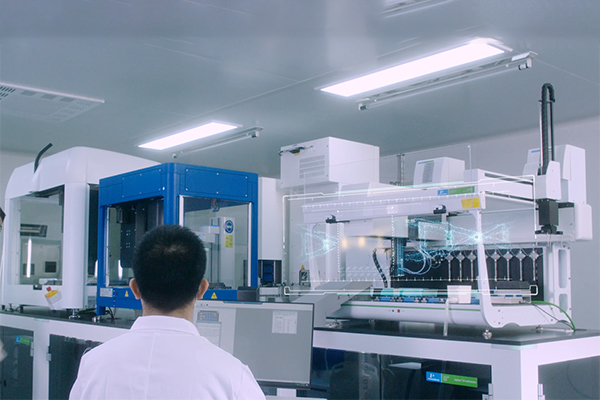
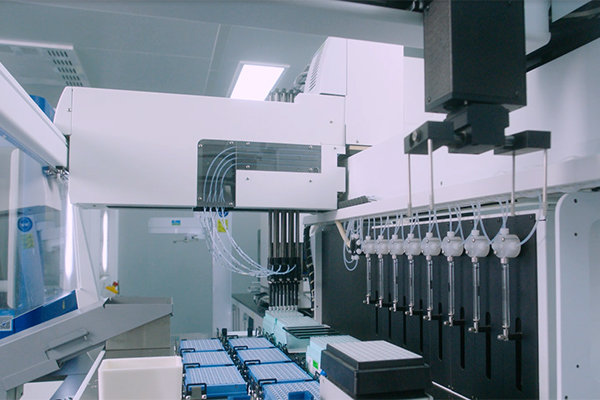
Fully Automated Platform for Next-generation sequencing--Brilliant Lab 1000
Biomarker technologies (BMKGENE) and PerkinElmer have jointly built a fully automated experimental production line, called Brilliant Lab 1000 (BL1000), which is applied to the high-throughput NGS library construction service.
BMKGENE strives to greatly improve the entire line of sequencing products in terms of product types, production line throughput, delivery quality, and cycle time, to provide customers with better sequencing services.
For academic researchers, automation eliminates manual pipetting variations, prevents sample misplacement across high-plex 96/384-well plates, and ensures that large-cohort longitudinal experiments maintain unmatched experimental reproducibility from sample receipt to data delivery.
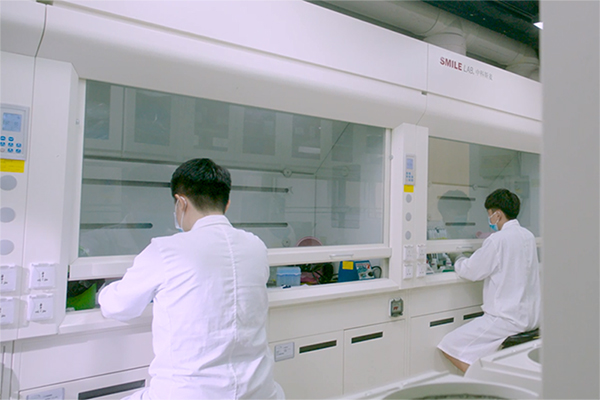
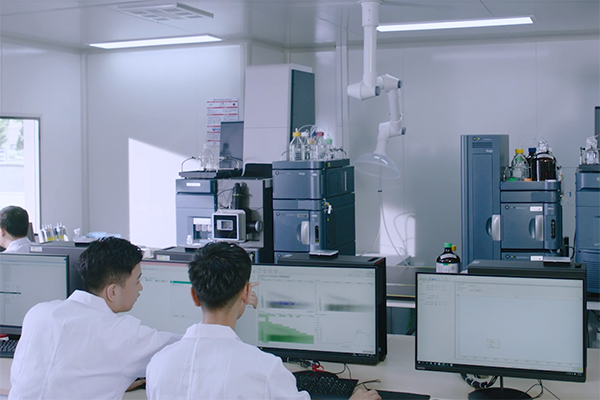
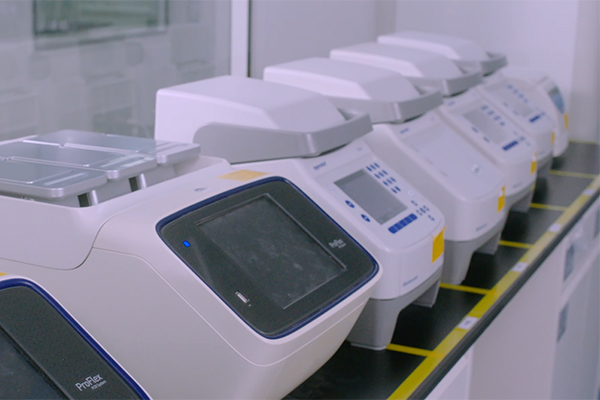
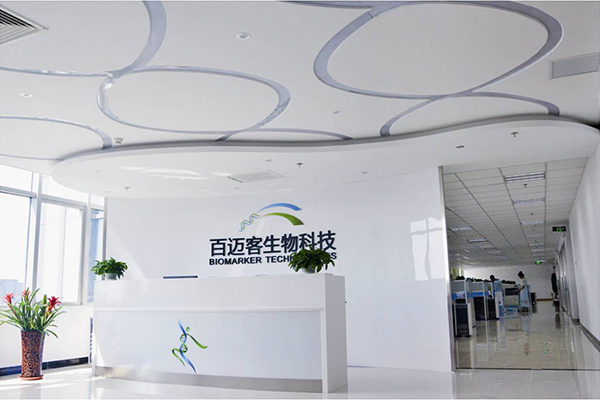
Certified Laboratory Facilities & Production Environments
Rigorous environmental controls, negative-pressure clean rooms, and automated liquid handling stations minimize contamination risk in ultra-sensitive amplicon experiments.



Enterprise Qualification & Joint Laboratories
Our institutional partnerships with leading technology creators and universities, supported by international quality certifications (ISO9001, ISO14001, OHSAS18001) and over 60 proprietary patents.

Certification on Nanopore-based service provider

Joint Laboratory with Pacific Biosciences & Gene Company Ltd.

National Academician Research Workstation

Joint Laboratory with PerkinElmer Inc.

Teaching Practice Base of Huazhong Agricultural University

Post-doctoral Research Workstation

Joint BioCloud Computing Lab with Huazhong Agricultural Univ.

National High and New Technology Enterprise Qualification
Patents & ISO Management Standard Certifications

ISO9001 Quality Certification

ISO14001 Certification

OHSAS 18001 Certification

Patent on bioinformatics task monitoring system

Patent on BMKCloud lncRNA Analysis

Patent on BMKCloud

Patent on BSA Biomarker Discovery

Patent on Genome De Novo Assembly

Patent on Hi-C Library Construction

Patent on High-Density Linkage Map

Patent on High-Throughput Data Analysis

Patent on Non-Reference RNA-Seq

Patent on Plant DNA Extraction Method

Patent on RRS Library Construction

Patent on SLAF-Seq Technique

Software Copyright on Hi-C Assembly 00

Software Copyright on Hi-C Assembly

Software Copyright on Microbiome Analysis

Software Copyright on Species Database
How We Empower Academic Researchers Worldwide
From initial experimental design and grant proposal consultation to high-tier journal publication support, BMKGene operates as an integrated academic research partner.
1. Rigorous Experimental Design & Customized Primer Engineering
Our senior genomic specialists collaborate with academic PIs from project conception. We offer guidance on statistical power calculation, biological replicate sizing, multiplex index balancing, and specialized primer synthesis (e.g., custom degenerate primers for unculturable marine lineages or optimized blocker oligos to reduce host-derived rRNA contamination).
2. Standardized Extraction & Quality Control Across Diverse Matrices
Equipped with our TGuide Smart Magnetic Tissue and environmental DNA extraction kits, our laboratories handle challenging matrices including soil, fecal pellets, marine sediments, plant tissue with high polyphenols, and low-input forensic swabs. Each sample undergoes spectrophotometric and fluorometric microplate quantification, paired with automated fragment analysis prior to library amplification.
3. High-Fidelity Sequencing & Automated Pipeline Construction
Combining Illumina NovaSeq for massive depth with PacBio Sequel II and Nanopore PromethION for full-length gene amplicons, we achieve zero cross-talk multiplexing. Our PerkinElmer Brilliant Lab 1000 automation guarantees rapid turnarounds and high uniformity across multi-plate academic cohorts.
4. Publication-Ready Bioinformatic Analysis on BMKCloud
Academic partners gain full access to BMKCloud’s bioinformatics modules: DADA2/Deblur ASV denoising, Alpha/Beta diversity metrics, LEfSe biomarker identification, PICRUSt2/Tax4Fun functional prediction, phylogenetic tree modeling, and co-occurrence network analysis. Data outputs comply with international repository submission standards (NCBI SRA, ENA, and GSA).
Complete Academic Genomics & Multi-Omics Solutions
Browse our full range of multi-omics sequencing and extraction products supporting high-impact academic collaborations globally.


Start Your Academic Cooperation With BMKGene
For inquiries about our amplicon sequencing services, custom academic project proposals, or our comprehensive pricelist, please connect with our technical specialists. We will be in touch within 24 hours.
Inquiry Now

