Core Targeted Sequencing Systems for Research & Industry
High-precision instrumentation and kit chemistry powering targeted genomic content pipelines
Industrial Landscape of Amplicon Sequencing in Content Creation
Translating targeted gene amplification into scalable molecular databases and verifiable digital genomic intelligence
Targeted Molecular Accuracy
Amplicon sequencing yields unmatched depth of coverage (>10,000x) at fractions of whole-genome costs, generating definitive variant data for clinical reports, molecular catalogs, and curated content libraries.
Curated Reference Catalogs
Standardized 16S, 18S, ITS, and custom amplicon panels populate public and proprietary bioinformatics databases, driving industrial content curation across agro-genomics, human microbiome, and forensics.
AI-Accelerated Interpretation
Integration with high-performance bio-cloud platforms enables automated variant calling, automated medical content generation, and instant interactive dashboard deployment for global research consortia.
Amplicon Sequencing: Defining Modern Genome Sequencing Content Creation
In contemporary genomics, content creation is no longer confined to publishing static academic papers. Rather, it encompasses the industrial generation of actionable, structured genomic data—including curated reference taxonomies, somatic variation databases, agricultural breeding catalogs, and synthetic biology validation logs. Amplicon sequencing operates as the bedrock of targeted genomic content generation. By selectively amplifying hypervariable or diagnostically crucial genomic loci via ultra-multiplex polymerase chain reaction (PCR) or target enrichment, amplicon sequencing allows laboratories and biopharma enterprises to produce authoritative biological insights with uncompromising sequencing depth.
While Whole Genome Sequencing (WGS) delivers an unbiased, genome-wide overview, its breadth often dilutes the coverage depth required to identify ultra-rare somatic mutations, minimal residual disease (MRD), low-abundance sub-clones, or cryptic taxonomic units in complex polymicrobial mixtures. Amplicon sequencing bypasses this bottleneck. By directing millions of sequencing reads precisely onto panels of 10 to 10,000 distinct amplicons, investigators generate deep-read profiles reaching tens of thousands of reads per target. This granular resolution converts raw genetic signals into validated diagnostic content, regulatory-grade compliance reports, and reproducible digital assets that fuel pharmaceutical research pipelines worldwide.
Commercial Market Dynamics & Global Trajectory
The targeted sequencing sector, spearheaded by high-throughput amplicon panels and target enrichment, is witnessing explosive commercial growth. Driven by the expansion of precision oncology, companion diagnostics (CDx), environmental DNA (eDNA) monitoring, and agricultural marker-assisted selection (MAS), the global amplicon sequencing market is expanding at an estimated compound annual growth rate (CAGR) exceeding 15%. Industrial labs and contract research organizations (CROs) are rapidly adopting automated end-to-end workflows to decrease turnaround times from weeks to hours.
A prominent catalyst in this commercial expansion is the demand for automated "sample-to-insight" reporting. Contract testing centers, academic research hubs, and enterprise biotechnology teams increasingly rely on standardized amplicon sequencing pipelines to produce high-value content deliverables: clinical exome hotspot panels, gut microbiome health scores, pathogen surveillance bulletins, and food provenance verification audits. In every scenario, high quality of content depends directly on automated library construction, stringent chemistry, and cloud-native bioinformatic backends.
Deep Application Scenarios of Amplicon-Driven Content Generation
Amplicon sequencing represents a versatile methodology underpinning specialized scientific disciplines. Below are key commercial and translational domains where amplicon sequencing drives mission-critical genomic content creation:
- Precision Oncology and Liquid Biopsy Content: Detection of actionable oncogenic drivers (EGFR, KRAS, BRAF, PIK3CA) from circulating cell-free DNA (cfDNA). Custom amplicon panels incorporating Unique Molecular Identifiers (UMIs) suppress PCR amplification bias and base-calling noise, yielding clean clinical diagnostic reports that guide targeted therapy choices.
- Metataxonomics & Comprehensive Microbiome Profiling: Full-length and multi-region sequencing of the 16S rRNA gene (V1-V9), 18S rRNA, and fungal Internal Transcribed Spacer (ITS) regions. High-fidelity PacBio HiFi or Nanopore long-read amplicons resolve microbial taxonomy down to species and strain levels, populating commercial catalogs for probiotics, metabolic health biomarkers, and soil revitalization programs.
- High-Throughput Agricultural Agrigenomics (MAS): Specific Locus Amplified Fragment Sequencing (SLAF-seq) and targeted amplicon genotyping panels empower plant and animal breeders to evaluate thousands of single nucleotide polymorphisms (SNPs) across expansive breeding populations, generating genomic selection indices and high-density genetic linkage maps.
- CRISPR-Cas Off-Target Validation in Cell & Gene Therapy: Ensuring genome editing safety mandates ultra-deep re-sequencing of bioinformatically predicted off-target genomic cleavage sites. Amplicon sequencing produces the auditable QC datasets and validation dossiers mandatory for investigational new drug (IND) regulatory filings.
- Environmental DNA (eDNA) & Biomonitoring Dashboards: amplicon panels targeting mitochondrial cytochrome c oxidase I (COI) or 12S rRNA enable aquatic and terrestrial ecosystem audits from water and soil specimens, supporting ESG corporate content creation and ecological impact reporting.
Resolving Bioinformatics Complexity: From ASVs to Knowledge Graphs
The value of amplicon data lies in the fidelity of bioinformatic translation. Modern pipelines have shifted from arbitrary 97% sequence-similarity clustering (Operational Taxonomic Units, OTUs) toward Exact Amplicon Sequence Variants (ASVs) via algorithms like DADA2 and Deblur. By calculating an explicit error model for each sequencing run, ASV methodology distinguishes actual biological variations differing by a single nucleotide from sequencing error artifacts.
When processed through enterprise platforms like BMKCloud, ASVs and high-depth variant call files (VCFs) are integrated with functional metabolic annotation databases (KEGG, MetaCyc, COG), antimicrobial resistance (AMR) registries, and cancer gene ontologies. The output transcends raw binary alignment files, generating dynamic dashboards, visual taxonomic sunburst plots, and structured JSON payloads that integrate with Laboratory Information Management Systems (LIMS).
Multi-Level High-Throughput Sequencing Platforms
Combining short-read precision with ultra-long single-molecule sequencing engines for multi-omics superiority

Next & Third-Gen Hardware
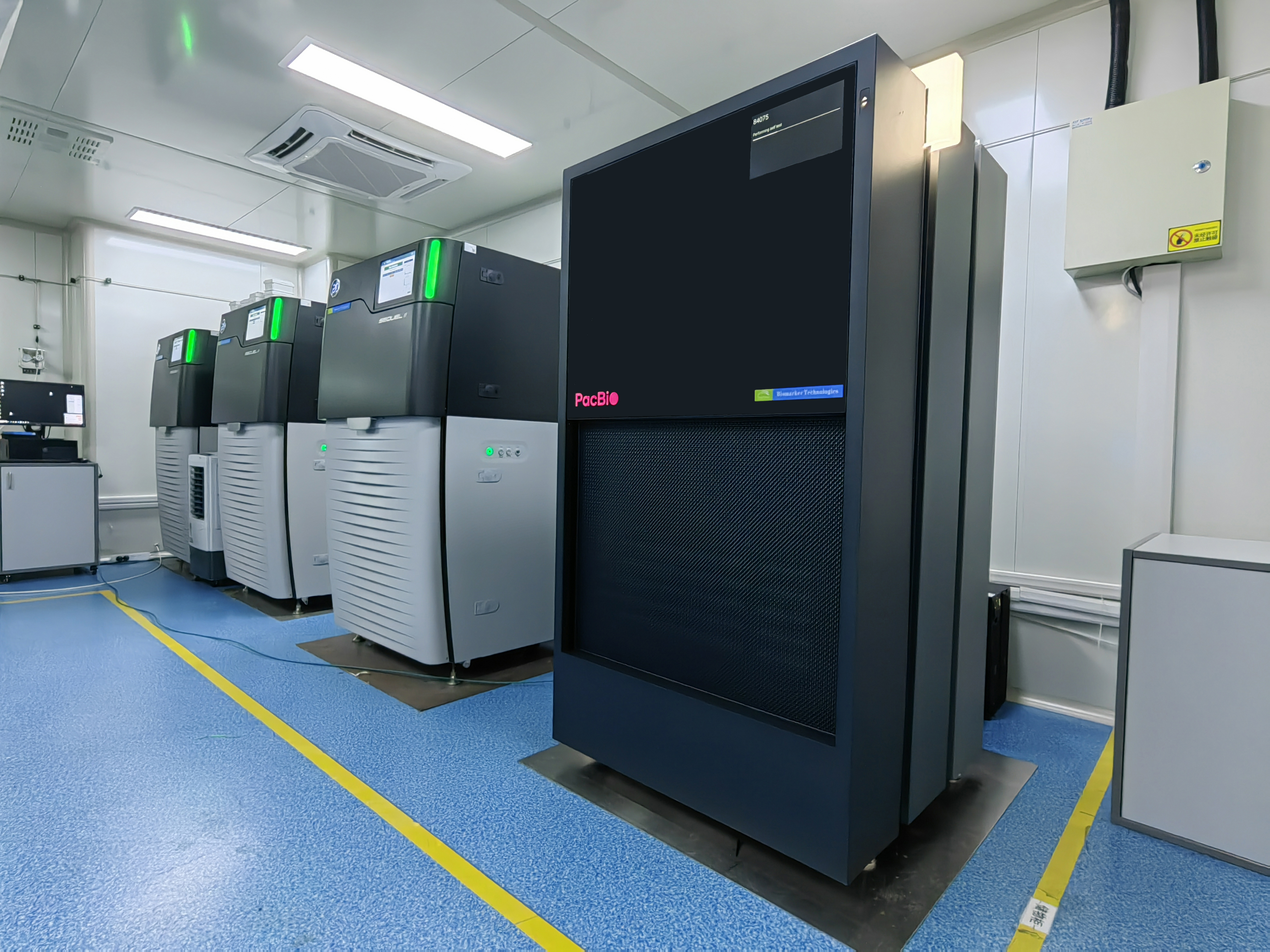
PacBio platforms: Sequel II, Sequel, RSII
Nanopore platforms: PromethION P48, GridION X5 MinION
10X Genomics: 10X ChromiumX, 10X Chromium Controller
Illumina platforms: NovaSeq
BGI platforms: DNBSEQ-G400, DNBSEQ-T7
Bionano Irys system
Waters XEVO G2-XS QTOF | QTRAP 6500+

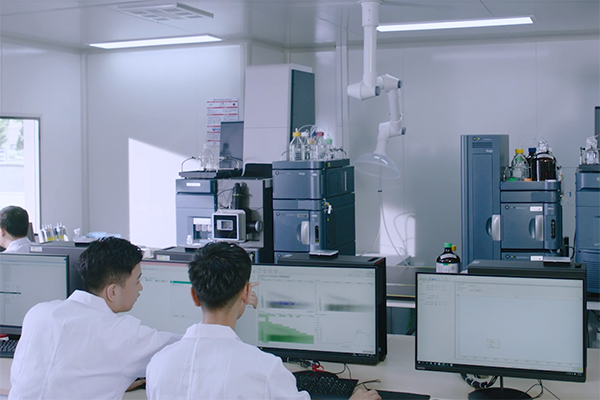
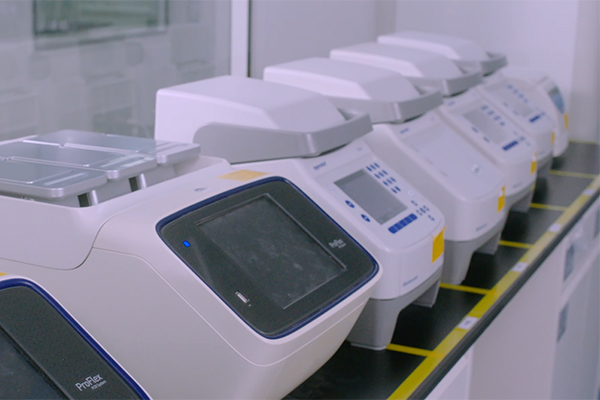
Professional Automatic Lab
Over 20,000 square feet of purpose-built molecular space equipped with cutting-edge biomolecular instrumentation.
Standardized facilities dedicated to automated sample extraction, library construction, clean rooms, and sequencing suites operating under rigorous standard operating procedures (SOPs).

BMKCloud Bioinformatic Center
Self-developed BMKCloud analytics platform delivering automated computational pipelines and interactive data exploration tools.
Powered by 41,104 memory, 3 PB high-speed storage, and 4,260 computing cores achieving a peak power over 121,708.8 Gflop/sec.
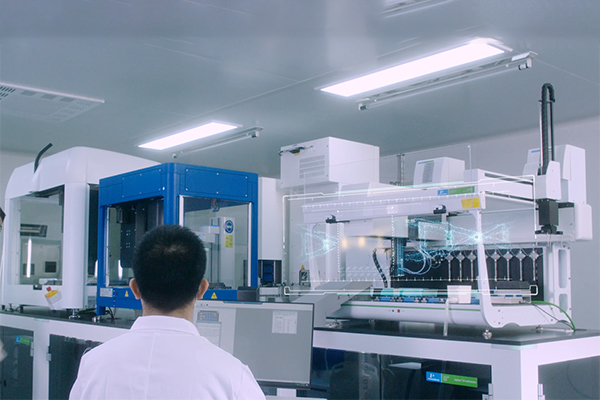
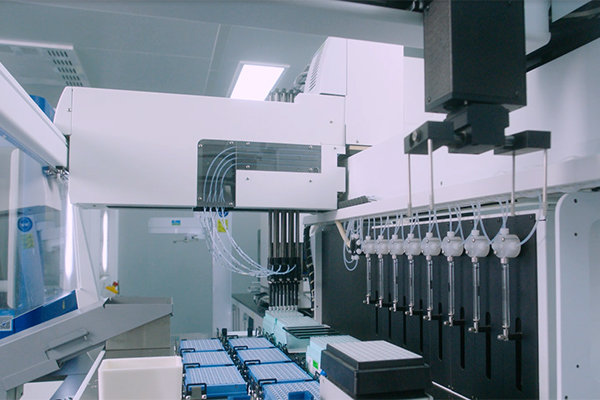
Fully Automated Platform for NGS: Brilliant Lab 1000 (BL1000)
Biomarker Technologies (BMKGENE) and PerkinElmer have jointly engineered the Brilliant Lab 1000 (BL1000), a revolutionary fully automated production line for high-throughput NGS library preparation and amplicon pipeline management.
By eradicating manual pipetting variables, BL1000 drastically boosts throughput, shortens turnaround cycles, and maximizes data uniformity—guaranteeing that every amplicon dataset conforms to the highest international quality benchmarks.
Automated Manufacturing & Molecular Sequencing Facilities





Emerging Horizons & Future Trajectories in Amplicon Genomics
Where long reads, single-cell resolution, and artificial intelligence converge
1. Full-Length Long-Read Amplicon Sequencing
Short-read amplicon profiling has historically encountered limits imposed by read lengths (typically 2x150bp or 2x300bp), necessitating targeting restricted sub-regions such as the V3-V4 hypervariable loops of the 16S gene. With the emergence of PacBio Circular Consensus Sequencing (CCS/HiFi) and Oxford Nanopore Q20+ sequencing chemistry, researchers can now amplify and sequence complete 1.5 kb 16S rRNA genes, 2.5 kb 16S-ITS-23S operons, and complex eukaryotic loci in single unbroken reads.
This transition from partial gene segments to complete multi-kilobase amplicons substantially increases taxonomic accuracy, enabling unambiguous species-level and strain-level classification. As reference libraries adopt full-length operon structures, digital microbiome content creation achieves unprecedented clinical and biotechnological utility.
2. Single-Cell & Spatial Amplicon Interrogation
The convergence of droplet-based single-cell partitioning (e.g., 10X Chromium) with targeted amplicon enrichment enables single-cell amplicon sequencing (scAmplicon-seq). This method empowers investigators to detect targeted somatic mutations, T-cell/B-cell receptor (TCR/BCR) repertoire clonotypes, and CRISPR-mediated single-base edits across tens of thousands of individual cells simultaneously.
Parallel developments in spatial biology—exemplified by BMKGene's proprietary BMKMANU S3000 spatial transcriptome platform—allow researchers to overlay targeted amplicon expressions directly onto histopathological tissue architecture. The resulting spatial molecular content maps microenvironmental cellular heterogeneity with extraordinary morphological context.
3. AI-Designed Multiplex Primer Panels
Designing ultra-multiplex amplicon panels containing hundreds to thousands of primer pairs in a single reaction volume has historically been constrained by primer-dimer formation, unequal GC melting kinetics, and uneven amplification efficiencies. Machine learning architectures now predict thermodynamic inter-primer interactions, structural secondary conformations, and genomic cross-hybridization with high predictive accuracy.
AI-optimized panels unlock single-tube target enrichment for non-model organisms, rare disease panels, and multi-pathogen surveillance screens, radically reducing experimental development cycles while ensuring uniform read representation across targets.
4. Autonomous Bioinformatics & Knowledge Extraction
Modern genomic laboratories generate terabytes of amplicon sequencing data daily. Autonomous cloud workflows convert raw FASTQ reads into interactive scientific deliverables without requiring manual script tuning. Natural language processing (NLP) and large language models (LLMs) trained on biomedical ontologies can synthesize clinical variant interpretations and taxonomic shifts directly into ready-to-publish scientific reports.
This automated transformation from basecall sequences to standardized, publication-grade genomic content democratizes deep genetic profiling, empowering clinicians, breeders, and research teams to make evidence-based decisions swiftly and reliably.
Proprietary Innovations, Patents & Global Accreditations
Backed by over 16 years of continuous innovation, 60+ national invention patents, and 200+ software copyrights serving clients across 84 regions worldwide.


Comprehensive Genomic & Transcriptomic Product Line
Integrated molecular reagent kits and high-throughput sequencing services supporting diverse scientific endeavors