Featured Multi-Omics & Annotation Solutions
High-resolution sequencing and molecular annotation platforms deployed to support research institutions across Kuala Lumpur and the Klang Valley.



Metabolite Annotation in Kuala Lumpur: Regional Context & Industry Dynamics
Bridging untargeted mass spectrometry outputs with actionable biological insights across biotechnology, agritech, and clinical sectors.
Kuala Lumpur, functioning as the financial, scientific, and technological hub of Malaysia, has rapidly transformed into an epicenter for advanced bio-analytical sciences. The national strategic push toward precision medicine, sustainable agricultural practices, and halal-certified bio-pharmaceutical development has dramatically elevated demand for high-throughput untargeted metabolomics and precise metabolite annotation. In functional biology, metabolomics represents the direct biochemical phenotype. While high-resolution Liquid Chromatography-Tandem Mass Spectrometry (LC-MS/MS) and Gas Chromatography-Mass Spectrometry (GC-MS) platforms yield extensive spectral datasets, spectral features remain inconclusive without rigorous, systematic, and confident structural annotation.
Current Commercial and Industrial Reality in the Klang Valley
Historically, research universities in Kuala Lumpur—such as Universiti Malaya (UM), Universiti Putra Malaysia (UPM), and the National University of Malaysia (UKM)—as well as statutory research bodies like the Malaysian Palm Oil Board (MPOB) and the Forest Research Institute Malaysia (FRIM), relied on disparate, open-source chemical libraries and manual MS2 spectra matching. This standard workflow frequently led to significant annotation bottlenecks, characterized by low annotation confidence (often limited to Level 3 or Level 4 annotations according to the Metabolomics Standards Initiative criteria) and substantial proportions of unclassified metabolic features.
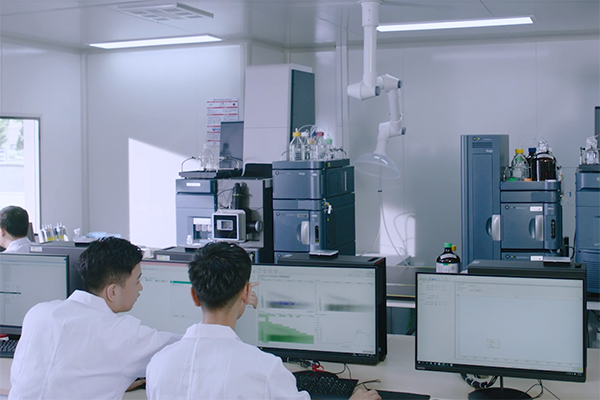
Today, the biotechnology corridor spanning Kuala Lumpur to Cyberjaya is demanding end-to-end industrial workflows. Commercial clinical laboratories, biotechnology startups, and agri-food conglomerates increasingly prioritize comprehensive chemical compound libraries, rigorous tandem mass spectral matching, retention time alignment, and machine learning-powered de novo fragmentation prediction. By pairing robust physical platforms like Waters XEVO QTOF and SCIEX QTRAP systems with high-performance bioinformatics pipelines, laboratories can accurately delineate chemical classes, biosynthetic pathways, and biomarker networks.
AI-Accelerated In-Silico Matching
Leveraging deep neural networks and machine-learned fragmentation patterns to annotate secondary metabolites where reference chemical standards are unavailable.
Curated Tropical Bio-Databases
Custom spectral libraries enriched for Southeast Asian tropical plant species, marine fauna, and natural microbial secondary compounds.
Integrated Multi-Omics Synergy
Cross-validating phenotypic metabolite annotations against whole-transcriptome, microbiome, and genomic assemblies for comprehensive pathway elucidation.
Emerging Trends & Localized Malaysian Applications
Addressing unique regional bio-challenges through precision identification of bioactive molecules.
1. Agro-Industrial Optimization: Oil Palm & Tropical Cash Crops
Malaysia is one of the world's primary producers of palm oil. A central focal point for metabolite annotation services in Kuala Lumpur laboratories is deciphering host-pathogen interactions, specifically the defense responses of Elaeis guineensis against basal stem rot induced by Ganoderma boninense. Untargeted profiling combined with precise metabolite annotation identifies phytoalexins, phenolic acids, flavonoids, and lipid remodeling species that indicate early infection stages before visible mechanical symptoms emerge. Concurrently, metabolite profiling guides breeding strategies to elevate tocotrienol and carotenoid concentrations across premium oil cultivars.
2. Halal Authentication and Phytochemical Fingerprinting
With Malaysia establishing gold standards in global halal compliance, advanced metabolite annotation plays a decisive role in verifying the chemical profiles of nutraceuticals, natural cosmetics, and functional foods. Traditional herbal medicines derived from Eurycoma longifolia (Tongkat Ali), Labisia pumila (Kacip Fatimah), and Orthosiphon stamineus (Misai Kucing) require precise secondary metabolite characterization to confirm geographic origin, avoid adulteration, and standardize commercial extracts according to the Malaysian Herbal Pharmacopoeia.
3. Clinical Biomarker Discovery and Tropical Diseases
Metabolic dysregulation patterns offer indispensable predictive capacity for urban lifestyle disorders prevalent in Malaysia, including Type 2 diabetes mellitus, non-alcoholic fatty liver disease (NAFLD), and cardiovascular syndromes. Furthermore, clinical researchers situated within academic medical centers in Kuala Lumpur deploy mass spectrometry-based metabolite annotation to profile dynamic serum metabolites across dengue fever progressions and antimicrobial-resistant microbial strains, uncovering disease stratification signatures.
Key Technology Trends Shaping the Industry
- Integration of Ion Mobility Spectrometry (IMS): Resolving structural isomers and isobaric metabolites by integrating Collision Cross Section (CCS) values alongside standard retention times and MS/MS spectra.
- Integrated Multi-Omics Data Fusion: Bridging RNA sequencing, metagenomic functional gene abundance, and spatial metabolomics to construct multi-layered biological models.
- Cloud-Scale Computational Pipelines: High-performance bioinformatics clusters handling terabytes of raw spectral data, executing automated deisotoping, background subtraction, chromatographic deconvolution, and multi-library cross-referencing.
Metabolite Annotation & Analysis Pricelist Guide (MYR / Kuala Lumpur)
Estimated industrial and academic project budgets based on analytical depth, batch size, and database matching rigor.
| Service Category | Technical Scope & Instrument Platform | Database / Annotation Level | Turnaround Time | Indicative Price (MYR) |
|---|---|---|---|---|
| Untargeted Metabolite Profiling | LC-MS/MS (Waters XEVO QTOF / Orbitrap), Positive & Negative Ion Modes | MSI Level 2/3 (HMDB, METLIN, KEGG, BMK In-House Library) | 15 - 20 Business Days | MYR 650 - 950 / sample |
| High-Confidence Targeted Annotation | MRM Mode on SCIEX QTRAP 6500+ Triple Quadrupole | MSI Level 1 (Validated against certified reference standards) | 10 - 15 Business Days | MYR 380 - 600 / sample |
| Deep Bioinformatic Annotation & Pathway Analysis | BMKCloud High-Performance Bioinformatic Cluster (PCA, OPLS-DA, KEGG Enrichment) | Customized multi-omics network modeling & metabolite-gene correlation | 3 - 5 Business Days | MYR 1,500 - 3,500 / project |
| Microbiome-Metabolome Dual Profiling | Amplicon 16S/ITS or Metagenomics combined with LC-MS Untargeted Run | Correlation mapping: Taxa abundance vs. Secondary annotated metabolites | 20 - 25 Business Days | Custom Package Quote |
* Note: Prices reflect baseline institutional project estimates across Malaysia. Exact rates vary based on sample extraction matrix complexities (e.g., plant recalcitrant tissues, clinical biofluids), total batch quantities, and dedicated reference standard requirements.
For inquiries about our products or pricelist, please leave your email to us.
We will be in touch within 24 hours.
Inquiry NowBiomarker Technologies (BMKGene): Global Multi-Omics Authority
Over 16 years of genomic and bio-analytical excellence supporting international research organizations across 84 regions.
Biomarker Technologies (BMKGene), founded in 2009, is a leading genomics service provider with over 16 years of continuous innovation in high-throughput sequencing and bioinformatics. Backed by more than 60 national invention patents and 200+ software copyrights, we deliver comprehensive multi-omics solutions—spanning genomics, metagenomics, epigenetics, single-cell omics, transcriptomics, and our proprietary BMKMANU S3000 spatial transcriptome technology—supported by our advanced BMKCloud bioinformatics platform. We have established long-term collaborations with organizations across 84 regions worldwide, providing reliable genomic solutions on a global scale.

Our Cutting-Edge Platforms
PacBio platforms: Sequel II, Sequel, RSII
Nanopore platforms: PromethION P48, GridION X5 MinION
10X Genomics: 10X ChromiumX, 10X Chromium Controller
Illumina platforms: NovaSeq
BGI-sequencing platforms: DNBSEQ-G400, DNBSEQ-T7
Bionano Irys system
Waters XEVO G2-XS QTOF
QTRAP 6500+

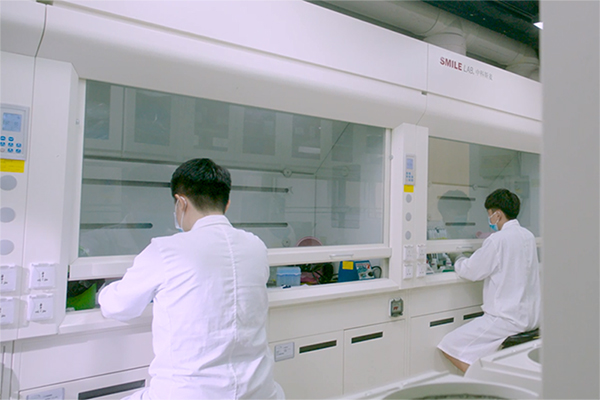
Over 20,000 Square Feet Space
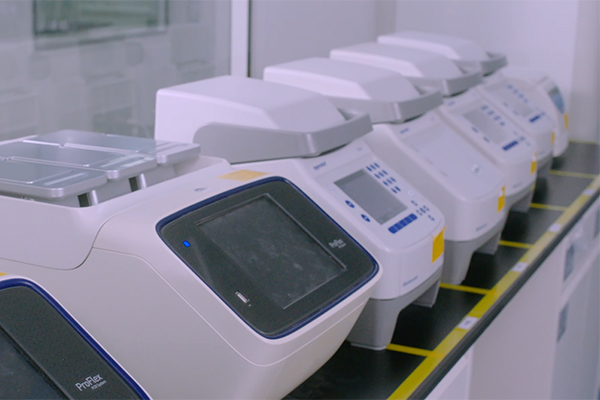
Advanced biomolecular laboratory instruments.
Standard labs for sample extraction, library construction, clean rooms, and sequencing facilities.
Standard operational procedures executed from sample reception through data delivery under stringent quality SOPs.

Reliable, Easy-to-Use Bioinformatic Cloud
Self-developed BMKCloud computing infrastructure.
Equipped with high-performance CPUs, 41,104 memory, and 3 PB total storage capacity.
4,260 computing cores achieving peak processing power surpassing 121,708.8 Gflops per second.
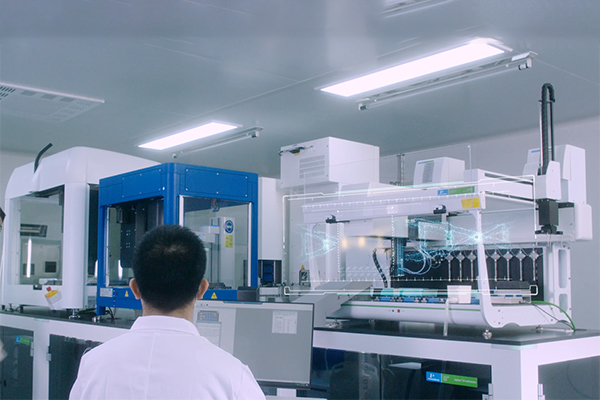
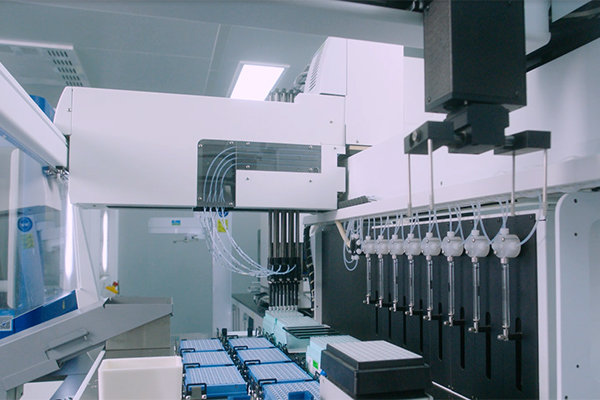
Fully Automated Platform for Next-generation sequencing -- Brilliant Lab 1000
Biomarker Technologies (BMKGENE) and PerkinElmer have jointly built a fully automated experimental production line, called Brilliant Lab 1000 (BL1000), which is applied to the high-throughput NGS library construction service.
BMKGENE strives to greatly improve the entire line of sequencing products in terms of product types, production line throughput, delivery quality, and cycle time, to provide customers with better sequencing services.
Precision Manufacturing & Molecular Production Facilities




Enterprise Qualification & Intellectual Property
Internationally recognized quality assurance accreditations, joint research laboratories, and proprietary software patents.


Comprehensive Omics Product Portfolio
Complete multi-omics solutions seamlessly integrated with metabolic annotation pipelines for academic and clinical research.