



Commercial Evolution & Multi-Omics Strategic Positioning
A Comprehensive Market, Technological, and Translational Analysis of Non-Coding RNA Sequencing
1. Executive Overview: Demarcating the Regulatory Frontier in Omics Portfolio Design
Historically considered transcriptional noise or "genomic dark matter," non-coding RNAs (ncRNAs)—encompassing long non-coding RNAs (lncRNAs), microRNAs (miRNAs), circular RNAs (circRNAs), and small interfering RNAs (siRNAs)—are now recognized as fundamental architects of epigenetic plasticity, transcriptional tuning, and translational control. In commercial genomics product portfolios, standard messenger RNA sequencing (mRNA-Seq) has faced severe commoditization with falling cost-per-gigabase metrics. Non-coding RNA sequencing (ncRNA-Seq) has emerged as an indispensable value-driver within multi-omics product positioning, transitioning molecular biology service portfolios from descriptive gene expression catalogs toward actionable mechanistic systems biology.
Strategic positioning of ncRNA-Seq requires positioning it not as an isolated assay, but as the linchpin integrating genomic variation, chromatin accessibility, spatial architecture, and phenotypic expression. As pharmaceutical pipelines pivot toward oligonucleotide therapeutics and precision oncology diagnostics, ncRNA profiling forms the critical evidentiary bridge required to annotate disease-associated single nucleotide polymorphisms (SNPs) located within non-coding chromosomal domains.
Strategic Value Proposition: Integrating whole-transcriptome ncRNA sequencing resolves the functional blind-spot of standard poly(A) capture methods, uncovering circularization events, alternative splicing modules, and competitive endogenous RNA (ceRNA) crosstalk networks driving modern translational discovery.
2. Current Commercial and Industrial Landscape
The global market for non-coding RNA profiling is expanding exponentially, pushed by escalating demand in biopharmaceutical early-discovery portfolios, liquid biopsy assay engineering, and agrarian molecular breeding programs. Industrially, contract research organizations (CROs) and core genomic providers face three distinct operational demands: library construction robustness across degraded inputs, bioinformatic resolution of non-polyadenylated transcripts, and deep multi-level regulatory synthesis.
Standard messenger-centric workflows systematically eliminate valuable regulatory transcripts by relying on oligo(dT) enrichment. In response, modern high-throughput facilities have shifted toward rRNA depletion techniques coupled with directional library architectures. Industrial positioning currently favors providers capable of delivering high multiplexing capacity with fully automated robotic systems, reducing batch variability across thousands of clinical biobank or translational trial cohorts.
3. Emerging Technological Trends & Next-Generation Paradigms
Several disruptive technological currents are actively redefining how ncRNA-Seq products are conceived, executed, and commercialized across the life science sector:
Long-Read Native and Full-Length Resolution: Third-generation platforms, including Pacific Biosciences (PacBio) Sequel and Oxford Nanopore Technologies (ONT) PromethION, have unlocked the capacity to read full-length, non-chimeric lncRNA transcripts without PCR amplification bias. This eliminates assembly artifacts inherent to short reads and clarifies complex exon-intron boundaries, isoform variants, and internal tandem repeats.
Single-Cell and Spatial Non-Coding Epigenomics: Resolving ncRNA expression at cellular resolution reveals regulatory switches masked in bulk homogenates. Integrating ncRNA profiling with spatial technologies, such as the BMKMANU S3000 platform, permits researchers to map tissue-specific microenvironments, immune infiltrations, and spatial niche signaling driven by localized non-coding regulators.
Epi-Transcriptomic RNA Modification Profiling: Unmodified sequence resolution is no longer the endpoint. Commercial pipelines increasingly integrate chemical or immunoprecipitation approaches (e.g., MeRIP-Seq, m6A, m5C, and pseudouridine mapping) onto ncRNA sequencing workflows, revealing chemical codes that modulate ncRNA stability and macromolecular protein assembly.
4. Granular Application Scenarios in Modern Science
The operational implementation of ncRNA-Seq services spans diversified, high-impact domains:
Liquid Biopsy and Circulating Biomarker Discovery: Circular RNAs (circRNAs) display covalently closed loop configurations devoid of free 5' or 3' ends, bestowing exceptional resistance to exonuclease degradation. This makes them extraordinarily stable biomarkers across peripheral biofluids (blood plasma, serum, urine, and cerebrospinal fluid). ncRNA sequencing allows non-invasive early-stage detection of carcinomas, cardiometabolic distress, and neurodegenerative alterations.
Target De-risking in RNA-Targeted Therapeutics: The explosion of antisense oligonucleotides (ASOs), small interfering RNAs (siRNAs), and targeted chimeric degradation compounds requires precise knowledge of target accessibility and unintended regulatory cross-talk. ncRNA-Seq platforms provide global off-target profiling and confirm targeted transcript knockdown without perturbing homeostatic ceRNA networks.
Agrigenomic Trait Optimization: In plant and animal breeding, stress responses, drought resilience, and disease vulnerability are largely orchestrated by non-coding loci. Linking ncRNA-Seq with bulked segregant analysis (BSA) accelerates marker-assisted breeding and genomic selection pipelines in agronomic crops without requiring transgenesis.
Deep Structural Characterization
Depletion-based strategies capturing poly(A)+ and poly(A)- molecules, exposing complex splice events, chimeric transcripts, and circularization motifs with directional strand integrity.
Competitive Regulatory ceRNA
Bioinformatic construction of circRNA-miRNA-lncRNA-mRNA regulatory networks to decipher competitive endogenous RNA actions driving phenotypic transitions.
Automated Ultra-Scale Production
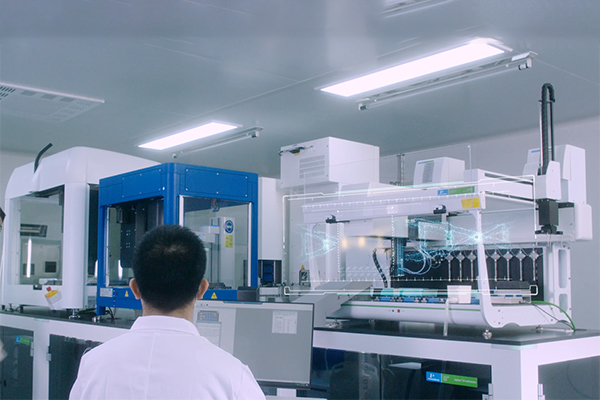
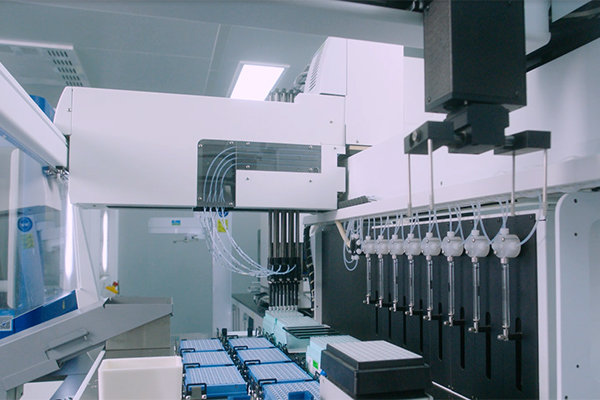
High-precision robotics ensuring uniform enzymatic reaction kinetic profiles, zero human pipetting drift, and accelerated turnaround times for large industrial cohorts.
About Biomarker Technologies (BMKGene)
Sixteen Years of Continuous Innovation in High-Throughput Omics Platforms

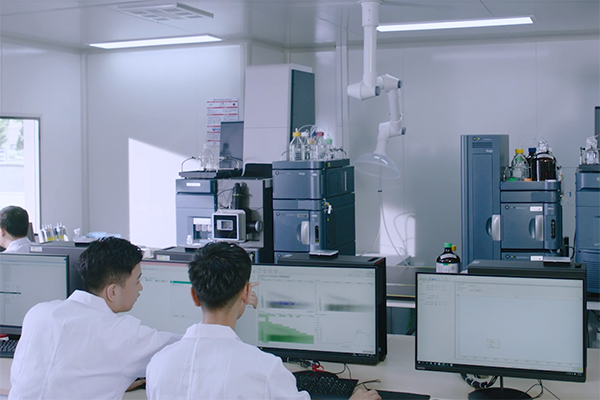
Our Instrumentation Platforms
PacBio platforms: Sequel II, Sequel, RSII
Nanopore platforms: PromethION P48, GridION X5 MinION
10X Genomics: ChromiumX, Chromium Controller
Illumina platforms: NovaSeq Series
BGI-sequencing: DNBSEQ-G400, DNBSEQ-T7
Bionano: Irys system
Mass Spectrometry: Waters XEVO G2-XS QTOF, QTRAP 6500+

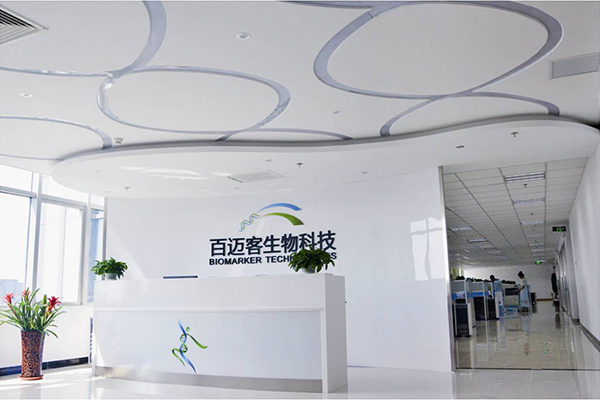
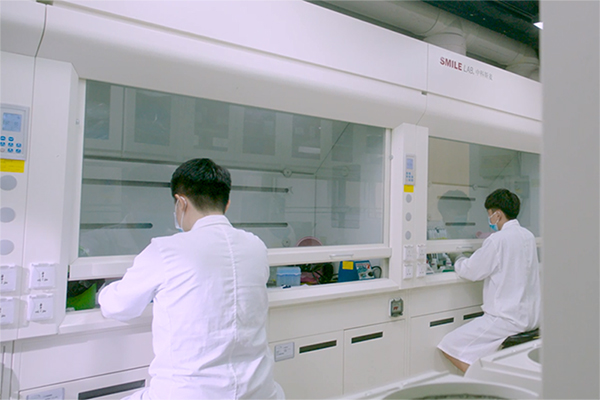
Over 20,000 Square Feet Facility
Advanced biomolecular laboratory instrumentation and specialized infrastructure.
Standardized operational modules for nucleic acid extraction, high-throughput library construction, certified clean rooms, and sequencing suites.
Strict operational SOP compliance from clinical sample intake to final sequencer loading.

BMKCloud Bioinformatic Supercomputing
Self-developed online bioinformatic analytics platform.
Enterprise CPUs backed by 41,104 memory capacity and 3 PB high-throughput storage.
4,260 high-performance computing cores delivering peak performance over 121,708.8 Gflop per second.
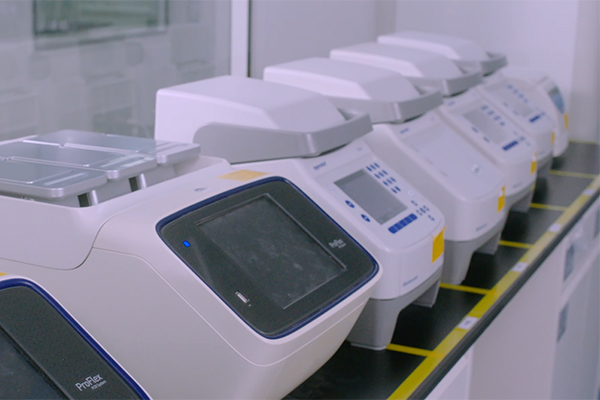
Fully Automated Platform for Next-generation Sequencing: Brilliant Lab 1000
Biomarker Technologies (BMKGENE) and PerkinElmer have jointly engineered a fully automated experimental production line, designated the Brilliant Lab 1000 (BL1000), engineered specifically for high-throughput NGS library preparation.
BMKGENE continuously optimizes its product suite across chemistry types, library batch scale, analytical precision, and rapid cycle times, establishing elite global service standards for genomic discovery.



Enterprise Qualifications, Patents & Certifications
Globally Certified Quality Controls and Patented Methodologies

Certification on Nanopore-based service provider

Joint Laboratory: BMK, PacBio & Gene Company

National Academician Research Workstation

Joint Laboratory with PerkinElmer Inc.

Teaching Practice Base of HZAU

Post-doctoral Research Workstation

Joint BioCloud Computing Lab with HZAU

High-Tech Enterprise Qualification

ISO9001 Quality Management Certification

Patent: Bioinformatics Task Monitoring System

Patent: BSA Biomolecular Marker Discovery

Patent: High-Density Linkage Map

Patent: Plant Genome DNA Extraction

Software Copyright: Hi-C Genome Assembly

Software Copyright: Species Database

ISO14001 Environmental Certification

Patent: BMKCloud LncRNA Analytics

Patent: Genome De Novo Assembly

Patent: High-Throughput Data Analysis

Patent: RRS Library Construction

Software Copyright: Hi-C Facilitation

OHSAS 18001 Occupational Safety

Patent: Cloud-based Non-Coding Engine

Patent: Hi-C Library Preparation Protocol

Patent: Non-Reference RNA Analytics

Patent: SLAF-Seq Methodology

Software Copyright: Metagenome Engine
Integrated Multi-Omics Solutions Portfolio
Synergizing Non-Coding Transcriptomics with Comprehensive High-Throughput Technologies


