Key Targeted & Multi-Omics Sequencing Solutions
Featured genomic platforms engineered for high analytical sensitivity, optimized coverage uniformity, and maximum on-target read utility.


Technical Architecture & Industry Context
Understanding the mechanistic imperatives of On-Target Rate across high-throughput targeted sequencing applications.
Amplicon sequencing represents the cornerstone of targeted next-generation sequencing (NGS), permitting researchers and clinicians to query defined genomic coordinates with unmatched read depth and turnaround speed. In every multiplex PCR-based or probe-assisted amplicon assay, the metric known as the On-Target Rate serves as the paramount operational Key Performance Indicator (KPI). The On-Target Rate is quantitatively defined as the fraction of sequenced and uniquely mapped reads that align explicitly to the predetermined target intervals relative to total clean sequencing reads generated. A high on-target rate guarantees that sequenced data are biologically functional rather than non-specific artifacts, directly dictating assay cost-efficiency, limits of detection (LoD), and variant-calling confidence.
As genomics transitions from pure discovery research into high-throughput industrial and clinical diagnostics, optimizing the on-target rate has become the deciding factor in commercial viability. In ultra-deep sequencing regimes—such as liquid biopsy tracking of circulating tumor DNA (ctDNA) or minimal residual disease (MRD) where sequencing depths frequently exceed 10,000x—every single percentage drop in on-target efficiency squanders substantial sequencing capacity on non-specific background genomic fragments, primer dimers, and off-target chimera. Industrial sequencing laboratories running tens of thousands of samples per month experience exponential reductions in sequencing consumable costs when elevating their on-target rate baseline from 75% to over 95%.
Mechanisms Behind Off-Target Generation and Mitigation Strategies
Achieving superior on-target efficiency requires overcoming formidable molecular biology hurdles inherent to multiplex amplification. Primers deployed simultaneously within a single reaction chamber can interact cross-wise, generating non-specific amplifications across pseudogenes, repetitive elements (such as LINEs and SINEs), or regions bearing sequence homology. Furthermore, unbalanced primer kinetics result in disproportionate amplicon representation, where certain loci consume an excessive fraction of reads while others remain under-sequenced.
To eliminate off-target reads, contemporary workflows leverage sophisticated computational primer design pipelines powered by thermodynamic equilibrium modeling and heuristic machine-learning algorithms. These algorithms rigorously predict cross-hybridization, adjust melting temperatures (Tm), and avoid repetitive elements. Experimentally, molecular mitigation involves the integration of dual-phase PCR programs, locked nucleic acids (LNAs), enzymatic digestion of aberrant non-target hairpins, and droplet digital compartmentalization to isolate distinct primer pairs during initial amplification cycles.
Thermodynamic Primer Architecture
Advanced algorithmic primer positioning prevents partial sequence alignment to pseudogenes and homologous off-target regions across complex mammalian genomes.
Enzymatic Dimer Cleavage
Incorporation of cleavable nucleotide analogs and specialized endonucleases that systematically degrade primer-dimer artifacts prior to platform adapter ligation.
Uniformity Optimization
Iterative empirical calibration of multiplex primer concentrations to achieve homogeneous amplification rates, eliminating over-amplified dominant targets.
Commercial Evolution & Deep Application Scenarios
Expanding the frontiers of amplicon sequencing across clinical oncology, agrigenomics, and environmental metagenomics.
1. Precision Oncology: Minimal Residual Disease (MRD) and Liquid Biopsy
In modern oncology, patient management has shifted toward longitudinal tracking of somatic mutations in cell-free DNA (cfDNA). Liquid biopsy assays operate on picogram quantities of degraded DNA molecules where circulating tumor fractions often constitute less than 0.01% of total plasma DNA. Detecting these ultra-low frequency variants necessitates ultra-deep sequencing (15,000x - 40,000x raw depth). In this application, any off-target read represents unrecoverable capital waste. A verified on-target rate exceeding 95% ensures that deep sequencing runs allocate data almost entirely to informative oncogenic drivers (e.g., EGFR, KRAS, BRAF, TP53), drastically elevating statistical sensitivity while curtailing per-sample testing costs to sustainable clinical reimbursement standards.
2. Molecular Agrigenomics: Genomic Selection & High-Throughput Breeding
Commercial crop and livestock breeding organizations require genotyping tens of thousands of markers across hundreds of thousands of individual specimens every season. Traditional microarrays suffer from fixed content, rigid synthesis costs, and batch inconsistencies. Multiplex amplicon sequencing (targeted genotyping-by-sequencing) has emerged as the definitive successor. Because commercial agrarian economics operate on pennies per sample, on-target rate consistency directly governs pipeline viability. Achieving a 98% on-target rate allows commercial breeders to pool hundreds of agricultural samples per flow cell without risking data dropouts or having to perform costly re-sequencing runs on valuable pedigree stocks.
3. Environmental Surveillance and Microbiome Profiling
Targeted amplicon sequencing of hypervariable ribosomal markers (such as the 16S, 18S, and fungal ITS regions) forms the backbone of global metagenomic microbiome profiling. In complex environmental substrates containing inhibitory humic acids, non-target plant DNA, or host genetic matter (e.g., mucosal biopsies), targeted primer specificity isolates microbial signatures from confounding background host genomes. Maximizing on-target reads in these frameworks prevents precious sequencer capacity from being flooded with host mitochondrial or plastid DNA reads, granting high resolution into obscure operational taxonomic units (OTUs) and rare microbial communities.
4. Viral Surveillance and Rapid Pathogen Detection
The global SARS-CoV-2 pandemic cemented multiplex amplicon tiling approaches (such as the ARTIC network architecture) as the gold standard for global genomic epidemiology. Rapid genomic surveillance of emerging zoonotic pathogens, antimicrobial resistance (AMR) reservoirs, and respiratory viral clusters relies completely on targeted tiled amplicons. High on-target rates guarantee high-quality consensus genome assembly even in clinical specimens carrying low viral copy numbers, avoiding amplification dropout and ensuring reliable phylogenetic strain identification.
Biomarker Technologies (BMK)
Biomarker Technologies (BMKGene), founded in 2009, is a leading genomics service provider with over 16 years of continuous innovation in high-throughput sequencing and bioinformatics. Backed by more than 60 national invention patents and 200+ software copyrights, we deliver comprehensive multi-omics solutions—spanning genomics, metagenomics, epigenetics, single-cell omics, transcriptomics, and our proprietary BMKMANU S3000 spatial transcriptome technology—supported by our advanced BMKCloud bioinformatics platform. We have established long-term collaborations with organizations across 84 regions worldwide, providing reliable genomic solutions on a global scale.

Leading Multi-Level Platforms
PacBio platforms: Sequel II, Sequel, RSII
Nanopore platforms: PromethION P48, GridION X5 MinION
10X Genomics: 10X ChromiumX, 10X Chromium Controller
Illumina platforms: NovaSeq
BGI-sequencing platforms: DNBSEQ-G400, DNBSEQ-T7
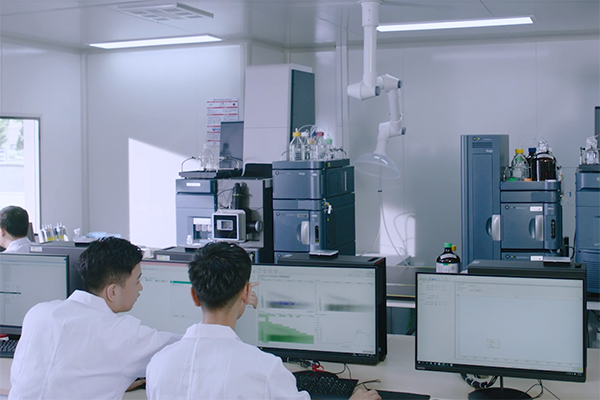
Mass Spectrometry: Bionano Irys system, Waters XEVO G2-XS QTOF, QTRAP 6500+

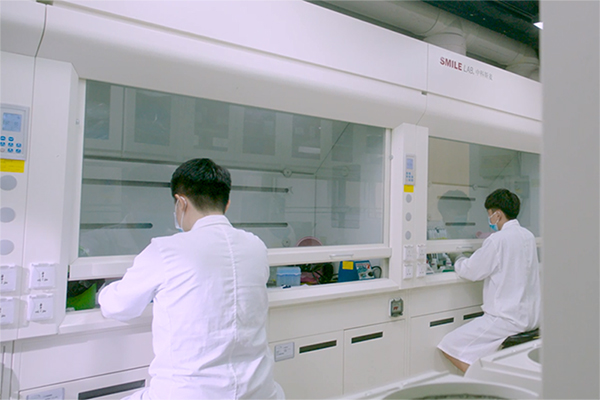
Over 20,000 Square Feet Facility
Advanced biomolecular laboratory instruments configured for high-capacity genomics.
Dedicated standard labs for sample extraction, targeted library construction, clean rooms, and sequencing operations.
Rigorous end-to-end standard operating procedures (SOPs) ensuring ultra-high on-target enrichment and reproducible library yields.

Reliable Online BMKCloud
Self-developed BMKCloud bioinformatics platform for seamless multi-omics computation.
CPUs equipped with 41,104 memory and an enterprise 3 PB total storage array.
Over 4,260 computing cores delivering peak processing performance surpassing 121,708.8 Gflop per second.
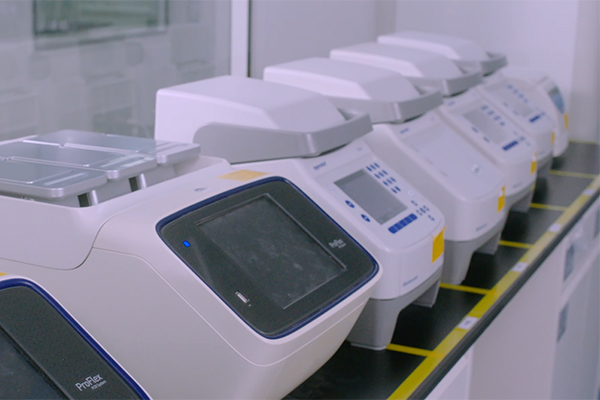
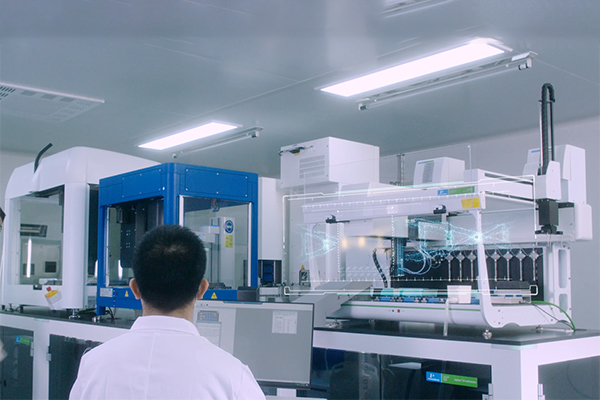
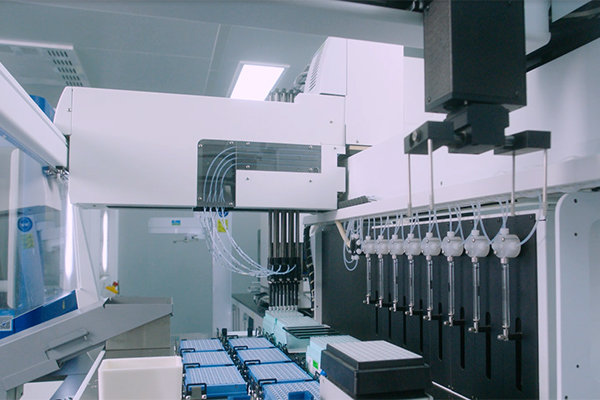
Fully Automated Platform for Next-generation sequencing--Brilliant Lab 1000
Biomarker technologies (BMKGENE) and PerkinElmer have jointly built a fully automated experimental production line, called Brilliant Lab 1000 (BL1000), which is applied to the high-throughput NGS library construction service.
BMKGENE strives to greatly improve the entire line of sequencing products in terms of product types, production line throughput, delivery quality, and cycle time, to provide customers with better sequencing services.
State-of-the-Art Automated Facilities
Industrializing amplicon and targeted sequencing through robotic precision, consistent temperature kinetics, and zero-cross-contamination workflows.




Enterprise Qualifications & Intellectual Property
Explore our certified quality accreditations, joint academic research centers, and cutting-edge patented technologies.


Comprehensive Omics Product Portfolio
Explore our complete ecosystem of next-generation sequencing, epigenomics, and metabolic profiling technologies.