Featured Multi-Omics Sequencing Solutions
Advanced high-throughput platforms tailored for specialized academic and industrial projects in Mexico




rRNA Depletion Landscape & Industrial Trends in Mexico
Navigating the transition from poly(A) enrichment to enzymatic rRNA removal across Latin America
Emergence of Mexican Biotech Hubs & Transcriptomic Demands
Mexico's biotechnology ecosystem has expanded rapidly across key technological clusters including Mexico City, Jalisco (Guadalajara's biomedical corridor), Nuevo León (Monterrey's industrial biotech hub), and Guanajuato's genomic centers such as CINVESTAV UGA-LANGEBIO. In both biomedical and agro-industrial sectors, ribosomal RNA (rRNA) depletion represents a critical technical hurdle. Because ribosomal RNA constitutes more than 80% to 90% of total cellular RNA, sequencing without targeted depletion results in vast expenditures on redundant reads. In Mexico, research teams working with partially degraded clinical archival samples (such as FFPE tissues from oncology biobanks) or non-model organisms (such as native crops, desert flora, and marine specimens) find traditional oligo(dT) poly(A) enrichment ineffective. Efficient rRNA depletion protocols allow Mexican researchers to capture the entire non-coding RNA landscape, pre-mRNA, and fragmented clinical transcripts with unmatched depth.
Targeted Probe Depletion
Utilizing customized sequence-specific antisense DNA oligos hybridizing to 16S/23S and 18S/28S rRNAs, followed by targeted RNase H enzymatic cleavage or magnetic bead capture, preserving regulatory lncRNAs and circular RNAs.
Degraded & FFPE RNA Salvage
Poly(A) selection fails on degraded archival specimens common in Mexican clinical repositories. Enzymatic rRNA depletion selectively eliminates structural RNAs while preserving fragmented transcripts down to low DV200 scores.
Agro-Genomics Customization
Crucial for Mexico's vital agricultural sector (maize, agave, tomato, and avocado), custom rRNA depletion overcomes abundant organellar (chloroplastic and mitochondrial) rRNA contamination in complex plant tissues.
Strategic Economic Impact: By maximizing meaningful sequencing depth over informative protein-coding and non-coding transcripts, professional rRNA depletion workflows reduce the total gigabase sequencing requirement by up to 50% per sample, making high-impact genomic studies substantially more accessible for Mexican research budgets.
Local Application Scenarios Across Mexico
Addressing national priorities in public health, bioprospecting, and sustainable agriculture
1. Clinical Oncology and Infectious Disease Surveillance
Major healthcare and clinical research institutions in Mexico City, Monterrey, and Guadalajara routinely profile archival biopsies to decipher drug-resistance pathways in gastric, breast, and cervical cancers. rRNA depletion enables comprehensive whole-transcriptome profiling from challenging formalin-fixed paraffin-embedded (FFPE) blocks. Furthermore, in clinical microbiology and viral surveillance, host and bacterial rRNA depletion allows metagenomic RNA sequencing (Meta-RNA-Seq) to identify novel viral variants, respiratory pathogens, and bacterial transcript dynamics directly from clinical swabs and blood fractions without amplification bias.
2. Agave, Maize, and Crop Resiliency Programs
Mexican agro-industrial researchers at institutions such as INIFAP and CIATEJ are pioneering transcriptome-guided breeding to combat severe drought, soil salinity, and pathogenic blights in vital economic crops like blue agave (Agave tequilana) and heirloom maize varieties. Whole-cell plant extracts present massive concentrations of chloroplastic 16S/23S rRNA alongside cytosolic rRNAs. Implementing universal or customized plant-specific rRNA depletion kits ensures maximum reads map to stress-responsive transcription factors, drought-tolerance transcripts, and non-coding regulatory elements.
3. Complex Environmental Microbiomes & Marine Metatranscriptomics
From the hyper-saline ponds of Cuatro Ciénegas to the deep-sea hydrothermal zones in the Gulf of California, Mexican microbial ecologists require whole-microbiome active expression analysis. rRNA depletion eliminates both eukaryotic and prokaryotic structural rRNAs from mixed soil, water, and gut microbiome samples, allowing precise quantification of carbon-fixation, sulfur-cycling, and antibiotic-resistance gene expression under fluctuating ecological conditions.
Our Advanced Technology & Sequencing Infrastructure
Global genomics pioneer providing end-to-end automation and bioinformatics excellence
Biomarker Technologies (BMK)
Biomarker Technologies (BMKGene), founded in 2009, is a leading genomics service provider with over 16 years of continuous innovation in high-throughput sequencing and bioinformatics. Backed by more than 60 national invention patents and 200+ software copyrights, we deliver comprehensive multi-omics solutions—spanning genomics, metagenomics, epigenetics, single-cell omics, transcriptomics, and our proprietary BMKMANU S3000 spatial transcriptome technology—supported by our advanced BMKCloud bioinformatics platform. We have established long-term collaborations with organizations across 84 regions worldwide, providing reliable genomic solutions on a global scale.
PacBio, Nanopore & NGS Fleets
PacBio platforms: Sequel II, Sequel, RSII
Nanopore platforms: PromethION P48, GridION X5 MinION
10X Genomics: 10X ChromiumX, 10X Chromium Controller
Illumina platforms: NovaSeq
BGI-sequencing platforms: DNBSEQ-G400, DNBSEQ-T7
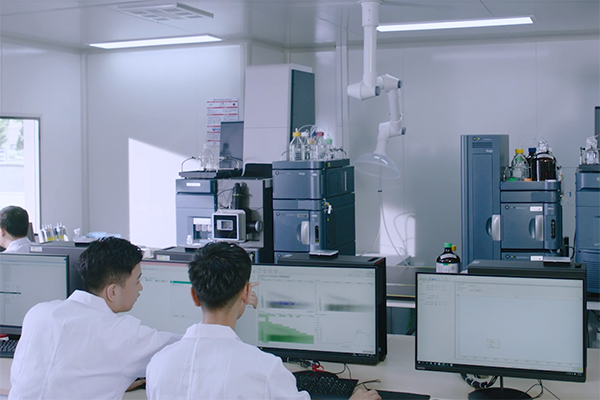
Analytical: Bionano Irys system, Waters XEVO G2-XS QTOF, QTRAP 6500+
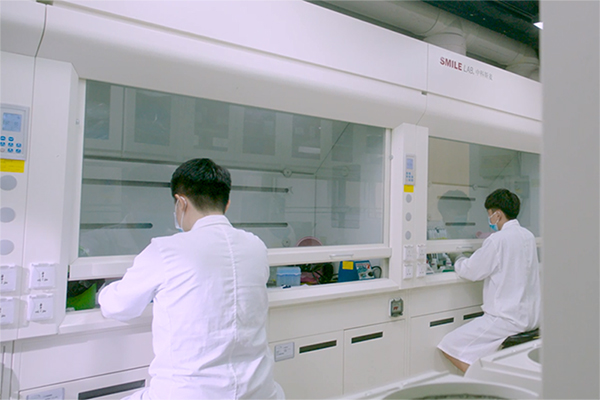
Over 20,000 Square Feet Laboratory
Advanced biomolecular laboratory instruments.
Standard labs of sample extraction, library construction, clean rooms, sequencing labs.
Standard procedures from sample extraction to sequencing under strict SOPs.
BMKCloud Bioinformatic Analysis
Self-developed BMKCloud platform with CPUs featuring 41,104 memory and 3 PB total storage.
4,260 computing cores with peak computing power over 121,708.8 Gflop per second delivering seamless data delivery for projects across Mexico.
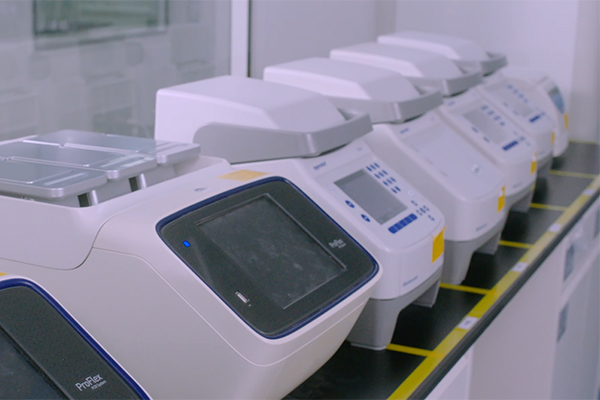
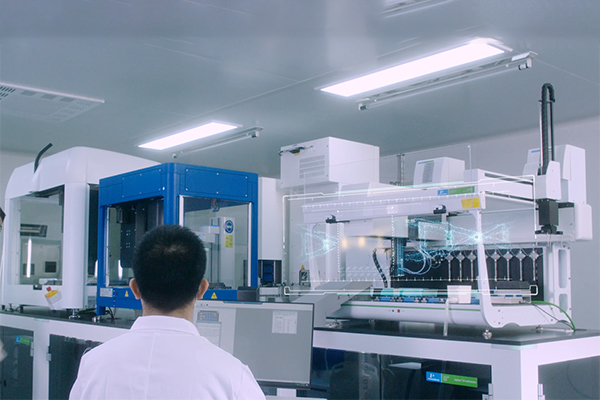
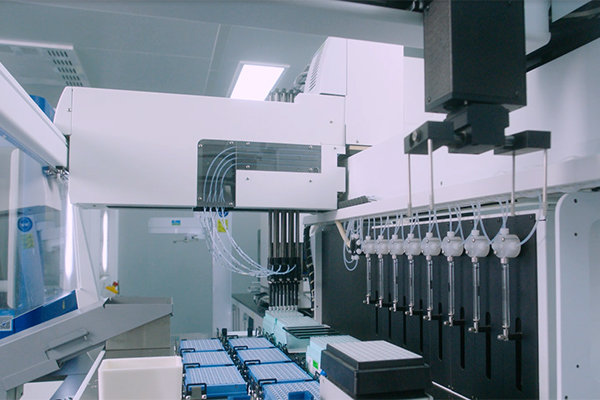
Fully Automated Platform for Next-generation sequencing--Brilliant Lab 1000
Biomarker technologies (BMKGENE) and PerkinElmer have jointly built a fully automated experimental production line, called Brilliant Lab 1000 (BL1000), which is applied to the high-throughput NGS library construction service.
BMKGENE strives to greatly improve the entire line of sequencing products in terms of product types, production line throughput, delivery quality, and cycle time, to provide customers with better sequencing services.




Enterprise Qualifications & Certified Excellence
Global accreditations, international quality standards, and proprietary patents


Explore Full Portfolio of Multi-Omics Sequencing Services
Comprehensive transcriptomic, genomic, and proteomic suites delivering accurate insights across Mexico