Featured Sequencing Solutions for Multi-Omics Research


What Is Shotgun Proteomics?
Definition & Core Principle
Shotgun proteomics (also called bottom-up proteomics) is a high-throughput mass spectrometry-based strategy in which proteins are enzymatically digested into peptides before LC-MS/MS analysis. This approach enables unbiased, large-scale identification and quantification of thousands of proteins simultaneously — without prior knowledge of which proteins are present.
Integration with Metabolomics
When combined with metabolomics workflows, shotgun proteomics delivers a powerful multi-omics perspective. Simultaneous profiling of the proteome and metabolome allows researchers to correlate enzyme activities with metabolic flux, map signaling cascades, and identify novel biomarkers with far greater biological context than either approach alone provides.
★ Why It Matters
Traditional targeted proteomics captures only pre-defined proteins. Shotgun strategies break this limitation — enabling truly discovery-driven research. From identifying unknown disease-associated proteins to characterizing entire microbial community proteomes, shotgun proteomics is the backbone of modern systems biology and precision medicine initiatives.
Shotgun Proteomics by the Numbers
Commercial & Industrial Landscape of Shotgun Proteomics
Biopharmaceutical Manufacturing
Shotgun proteomics is now integral to biopharmaceutical quality control pipelines. Companies use it to characterize host cell proteins (HCPs) in recombinant biologics, monitor post-translational modifications (PTMs), and ensure batch-to-batch consistency — directly impacting regulatory submissions and drug approval timelines. The FDA increasingly expects deep proteomic characterization data in BLA/NDA filings.
Agricultural & Food Science
In food safety and agricultural biotechnology, shotgun proteomics enables allergen detection, GMO protein profiling, crop stress response analysis, and soil microbiome characterization at an industrial scale. Multi-omics pipelines coupling shotgun proteomics with metabolomics are transforming precision agriculture by linking soil protein dynamics to crop yields.
Clinical Diagnostics & Biomarker Discovery
Clinical laboratories are rapidly adopting shotgun proteomics for plasma biomarker discovery, early cancer detection (e.g., circulating tumor proteins), and companion diagnostics. Data-independent acquisition (DIA) workflows now enable reproducible, quantitative protein panels comparable in clinical utility to established immunoassay panels — but with vastly higher multiplexing capacity.
Environmental & Microbiome Research
Metaproteomics, a subset of shotgun proteomics, is used industrially to monitor water treatment microbiomes, optimize fermentation processes, and assess environmental contamination. Coupling metatranscriptome sequencing with metaproteomics data provides a complete picture of active metabolic functions in complex microbial communities — critical for industrial biotechnology.
Emerging Trends Driving Shotgun Proteomics Forward
AI-Powered Spectral Interpretation
Deep learning models — including AlphaFold-informed fragment ion predictors and transformer-based de novo sequencing tools — are dramatically improving peptide identification rates and false discovery rate control. AI integration is enabling sub-nanogram proteome profiling and dramatically reducing required sample amounts for clinical specimens.
DIA & Single-Cell Proteomics
Data-Independent Acquisition (DIA) combined with spectral library matching is becoming the new standard for quantitative shotgun proteomics — offering superior reproducibility over DDA. Meanwhile, single-cell proteomics platforms (e.g., nanodroplet-based sample preparation) are extending shotgun analysis to individual cells, opening new frontiers in developmental biology and cancer research.
Multi-Omics Data Integration Platforms
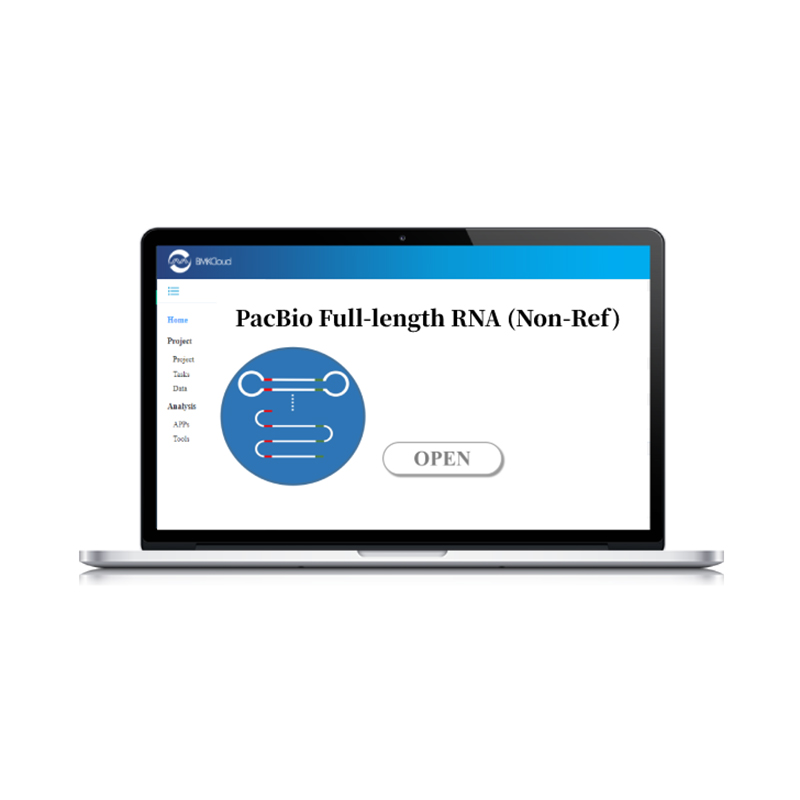
The future of proteomics is not siloed — cloud-native bioinformatics platforms like BMKCloud are converging proteomics, metabolomics, transcriptomics, and genomics data into unified analytical environments. Automated pipelines that cross-correlate mRNA expression levels with protein abundances and metabolite concentrations are enabling systems-level biological interpretation at unprecedented scale.
Automation & High-Throughput Workflows
Robotic sample preparation systems (such as BMK's Brilliant Lab 1000 in collaboration with PerkinElmer) are eliminating bottlenecks in proteomics pipelines. Fully automated workflows — from tissue lysis to LC-MS injection — are reducing turnaround times from weeks to days while improving reproducibility and enabling industrial-scale proteomics as a service.
Deep Application Scenarios in Proteomics & Metabolomics
Cancer Multi-Omics Profiling
Integrate shotgun proteomics with RNA-seq and metabolomics to build comprehensive tumor molecular portraits — accelerating targeted therapy discovery and patient stratification.
Infectious Disease & Host-Pathogen Interaction
Simultaneously characterize host immune proteomes and pathogen protein expression — identifying virulence factors and novel vaccine targets with systems-level precision.
Plant Stress & Crop Improvement
Map stress-responsive protein networks under drought, salinity, or pathogen challenge — enabling molecular breeding strategies grounded in proteome-level understanding.
Drug Target Identification
Profile protein-drug interactions and off-target effects at proteome scale using chemical proteomics — dramatically reducing preclinical attrition rates in drug development pipelines.
Cardiovascular & Metabolic Disease
Correlate plasma proteome dynamics with metabolic signatures in large longitudinal cohorts — uncovering predictive biomarker panels for cardiovascular risk stratification.
Exosome & Extracellular Vesicle Biology
Combine exosomal RNA sequencing with shotgun proteomic cargo profiling to decode cell-to-cell communication pathways — critical for liquid biopsy development and immunotherapy research.
Our Platforms

Leading Multi-level High-throughput Sequencing Platforms
- PacBio: Sequel II, Sequel, RSII
- Nanopore: PromethION P48, GridION X5, MinION
- 10X Genomics: ChromiumX, Chromium Controller
- Illumina: NovaSeq
- BGI: DNBSEQ-G400, DNBSEQ-T7
- Bionano Irys · Waters XEVO G2-XS QTOF · QTRAP 6500+

Professional, Automatic Molecular Laboratory
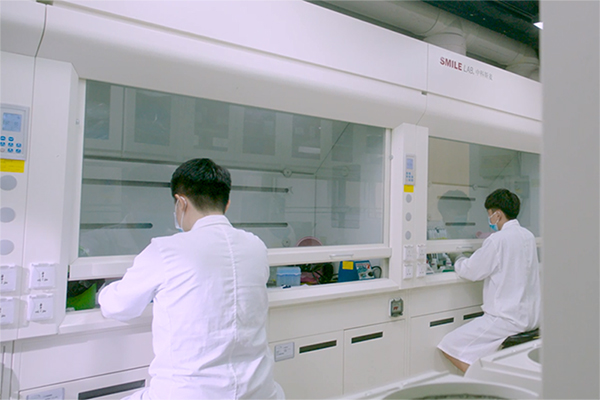
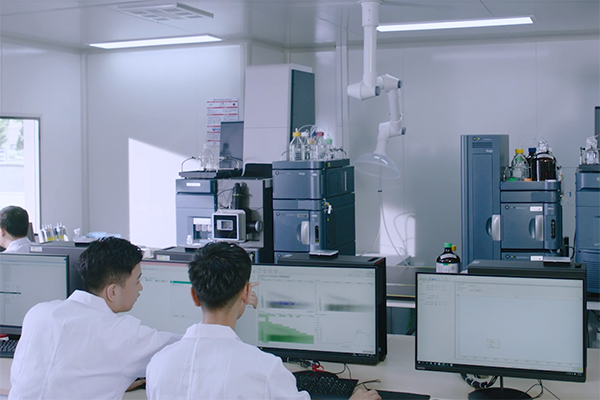
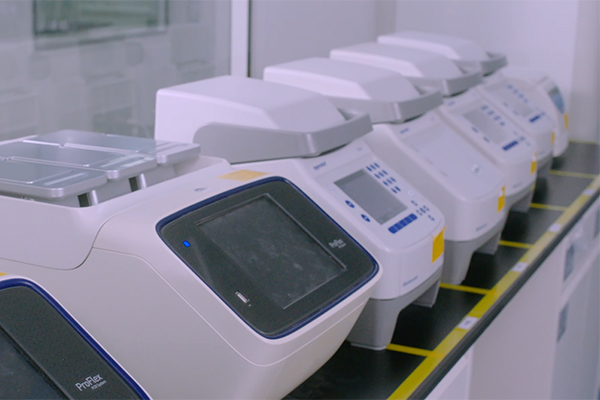
Over 20,000 square feet of advanced biomolecular laboratory space.
Standard labs for sample extraction, library construction, clean rooms, and sequencing — all operating under strict SOPs from sample receipt to data delivery.

Reliable, Ease-to-use Online Bioinformatics Platform
Self-developed BMKCloud platform powering multi-omics data analysis.
CPUs with 41,104 memory cores and 3 PB total storage. 4,260 computing cores with peak computing power exceeding 121,708.8 Gflop/s.
Fully Automated Platform for Next-Generation Sequencing
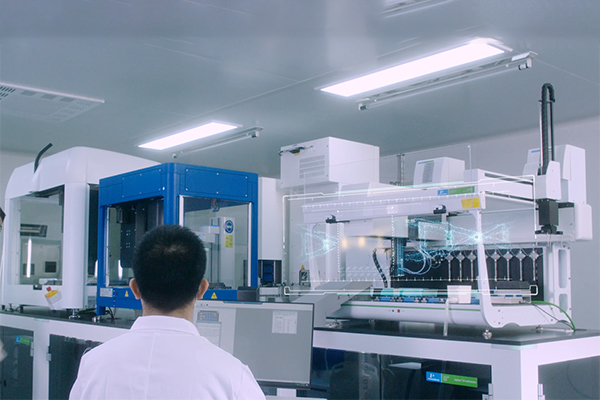
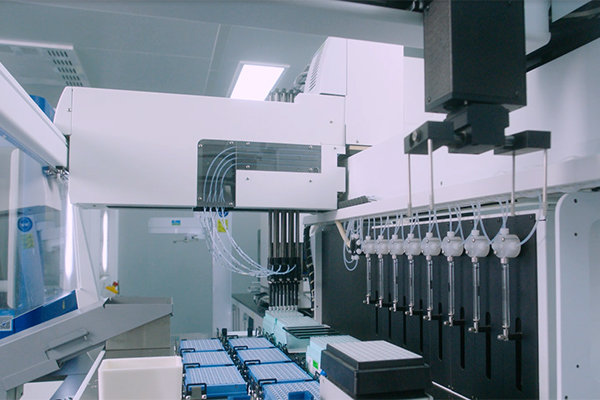
Brilliant Lab 1000 — Fully Automated NGS Production Line
Biomarker Technologies (BMKGENE) and PerkinElmer have jointly built a fully automated experimental production line, called Brilliant Lab 1000 (BL1000), applied to high-throughput NGS library construction service.
BMKGENE strives to greatly improve the entire line of sequencing products in terms of product types, production line throughput, delivery quality, and cycle time — to provide customers with better sequencing and multi-omics services worldwide.




About Biomarker Technologies (BMKGene)
Biomarker Technologies (BMKGene), founded in 2009, is a leading genomics service provider with over 16 years of continuous innovation in high-throughput sequencing and bioinformatics. Backed by more than 60 national invention patents and 200+ software copyrights, we deliver comprehensive multi-omics solutions — spanning genomics, metagenomics, epigenetics, single-cell omics, transcriptomics, and our proprietary BMKMANU S3000 spatial transcriptome technology — supported by our advanced BMKCloud bioinformatics platform. We have established long-term collaborations with organizations across 84 regions worldwide, providing reliable genomic and proteomic solutions on a global scale.
Ready to power your proteomics & metabolomics research with BMKGene?
For inquiries about our products or pricelist, please leave your email to us. We will be in touch within 24 hours.
Inquiry NowEnterprise Qualifications & Certifications