
1. The Paradigm Shift in Spatial Transcriptomics & Deconvolution
Bridging the Gap Between Bulk Sequencing Resolution and Spatial Context
Spatial Transcriptomics (ST) has emerged as a transformative frontier in molecular biology, enabling researchers to map mRNA expression directly within intact tissue architecture. However, traditional sequencing-based spatial technologies (such as spot-based transcriptomics) face a fundamental physical limitation: each spatial capture spot (ranging from 10 µm to 100 µm in diameter) frequently captures mRNA transcripts derived from a heterogeneous mixture of multiple cells. Without computational unraveling, the precise cellular composition of each spatial spot remains ambiguous.
Spatial Cell Type Deconvolution represents the computational bridge that resolves this resolution bottleneck. By leveraging matched single-cell RNA sequencing (scRNA-seq) reference datasets or single-cell atlas priors, sophisticated probabilistic deconvolution algorithms mathematically estimate the exact proportion and distribution of distinct cell types across every spatial coordinate. In the modern genomic market, spatial cell type deconvolution is no longer merely a post-hoc bioinformatic option; it has become an indispensable requirement for high-impact commercial biopharma R&D, clinical translation, and biomarker validation.
Single-Cell Spot Resolution
Deconstruct multi-cellular spatial spots into discrete cell type percentages, restoring true single-cell microenvironment fidelity.
Microenvironment Niche Mapping
Identify cell-cell communication networks, immune cell infiltration zones, and tumor-stroma boundaries in situ.
Commercial Target Validation
Accelerate drug candidate discovery by pinning down therapeutic target expression to specific cell subtypes in disease tissue.
2. Algorithmic Frameworks & Deconvolution Workflows
Cell type deconvolution algorithms utilize statistical modeling, Bayesian inference, and machine learning to map reference scRNA-seq expression signatures onto spatial coordinates. Selecting the optimal computational workflow is crucial for market success in translational genomics.
- Reference-Based Bayesian Models: Algorithms like Cell2location and RCTD (Robust Cell Type Deconvolution) model transcript counts via Poisson or Negative Binomial distributions to account for technical platform effects.
- Non-Negative Matrix Factorization (NMF): Approaches such as SPOTlight decompose spatial spot profiles into linear combinations of single-cell marker gene sets.
- Deep Learning & Spatial Mapping: Tools like Tangram and SpatialDWLS use deep neural networks and optimal transport to map single cells directly onto spatial histological space.
- Reference-Free & Unsupervised Methods: Deconvolving spatial datasets without matched scRNA-seq priors by discovering latent cellular gene modules.
Key Bioinformatic Considerations
1. Cross-Platform Normalization: Mitigating batch effects between scRNA-seq references and spatial captures.
2. Low-Abundance Cell Detection: Accurately identifying rare immune subsets or stem cell niches within dense tissue matrices.
3. Spatial Continuity & Co-expression: Utilizing neighbor-spot histology data to constrain probabilistic deconvolution models.
3. Strategic Industry & Commercial Application Scenarios
How Pharmaceutical, Clinical, and AgBio Organizations Monetize Deconvolution
The commercial market for Spatial Transcriptomics is expanding rapidly across pharmaceutical research, clinical pathology, and bio-agriculture. Cell type deconvolution provides the actionable spatial insights necessary to de-risk drug development pipelines and discover novel biological markers.
Oncology & Tumor Microenvironment (TME)
In immuno-oncology R&D, understanding tumor-infiltrating lymphocytes (TILs), cancer-associated fibroblasts (CAFs), and myeloid-derived suppressor cells (MDSCs) is vital. Deconvolution reveals spatial immune exclusion, tertiary lymphoid structures (TLS), and checkpoint ligand interaction hubs, driving target validation for monoclonal antibodies and antibody-drug conjugates (ADCs).
Neuroscience & Neurodegenerative Pathology
Brain tissue exhibits intricate spatial compartmentalization. Spatial deconvolution maps glial cell activation, microglial neuroinflammation, and neuronal subtype vulnerability around amyloid-beta plaques in Alzheimer's disease or alpha-synuclein aggregates in Parkinson's models.
Plant Science & AgBio Engineering
Crop genomic research utilizes spatial transcriptomics to dissect plant tissue morphology, vascular development, and cellular responses to abiotic stress. Deconvolution allows breeders to isolate tissue-specific regulatory networks without tedious laser capture microdissection (LCM).
4. BMKGene Enterprise Infrastructure & Technological Superiority
Empowering Global Researchers with End-to-End High-Throughput Spatial Solutions
Biomarker Technologies (BMKGene), founded in 2009, is a leading genomics service provider with over 16 years of continuous innovation in high-throughput sequencing and bioinformatics. Backed by more than 60 national invention patents and 200+ software copyrights, we deliver comprehensive multi-omics solutions—spanning genomics, metagenomics, epigenetics, single-cell omics, transcriptomics, and our proprietary BMKMANU S3000 spatial transcriptome technology—supported by our advanced BMKCloud bioinformatics platform. We have established long-term collaborations with organizations across 84 regions worldwide, providing reliable genomic solutions on a global scale.
Leading, Multi-level High-throughput Sequencing Platforms
PacBio platforms: Sequel II, Sequel, RSII
Nanopore platforms: PromethION P48, GridION X5 MinION
10X Genomics: 10X ChromiumX, 10X Chromium Controller
Illumina platforms: NovaSeq
BGI-sequencing platforms: DNBSEQ-G400, DNBSEQ-T7
Bionano Irys system
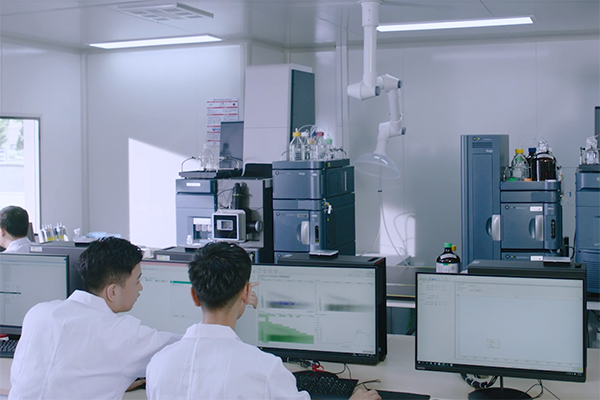
Waters XEVO G2-XS QTOF
QTRAP 6500+
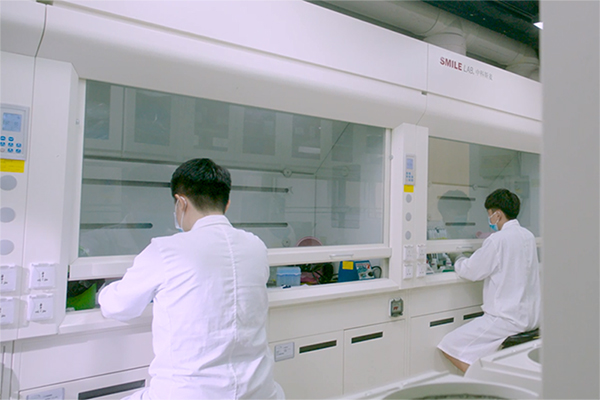
Professional Automated Molecular Laboratory
• Over 20,000 square feet operational facility.
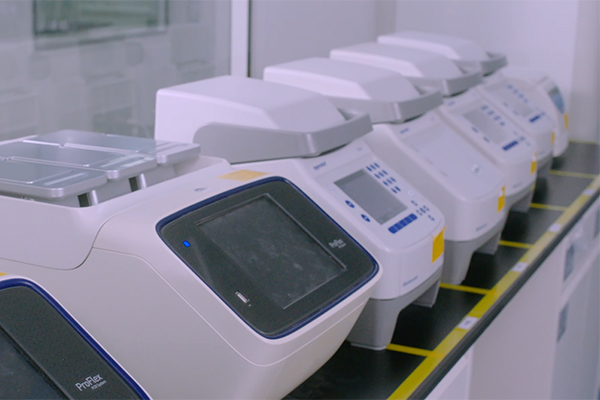
• Advanced biomolecular laboratory instruments.
• Standardized clean rooms for sample extraction, library construction, and sequencing labs.
• Rigorous quality control SOPs ensuring reproducible computational and experimental deliverables.
5. High-Throughput Automation & Quality Qualifications
Brilliant Lab 1000 Automation & Global Certification Standards
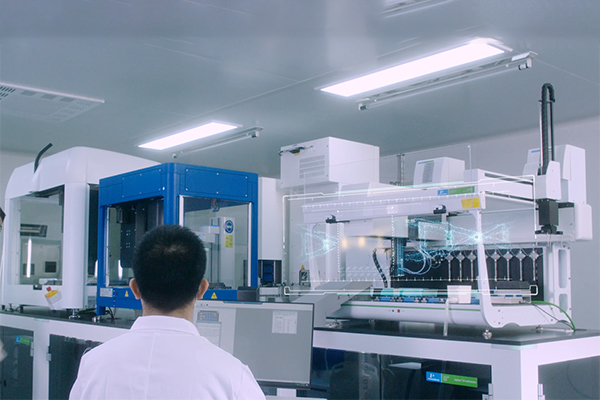
Brilliant Lab 1000 (BL1000) NGS Automation
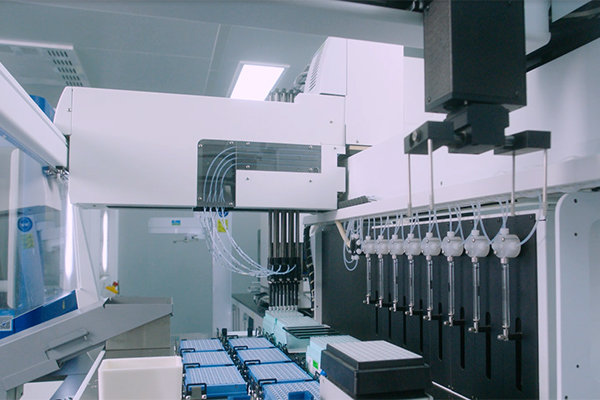
Biomarker Technologies (BMKGENE) and PerkinElmer have jointly built a fully automated experimental production line, called Brilliant Lab 1000 (BL1000), applied to high-throughput NGS library construction service. BMKGENE strives to greatly improve product types, line throughput, delivery quality, and turnaround cycle times.
State-of-the-Art Production Facility




Enterprise Qualifications & Industry Accreditations


Accelerate Your Spatial Transcriptomics Project Today
For inquiries about our spatial cell type deconvolution workflows, sequencing platforms, or custom pricelists, leave your email with us. Our technical specialists will respond within 24 hours.
Inquire Now & Enterprise Qualification6. Future Trends in Spatial Cell Type Deconvolution Marketing
AI-Driven Spatial Models, Multi-Omics Integration, and Subcellular Imaging
The market for Spatial Transcriptomics analysis is rapidly evolving toward higher spatial resolution, larger slide throughput, and multi-modal integration. Key technological trajectories shaping the market include:
Subcellular In Situ Sequencing
Next-generation spatial platforms are shifting from multi-cellular spot capture (e.g., 50 µm spots) toward sub-micron subcellular resolution (e.g., BMKMANU S3000 platform, MERFISH, Xenium). Subcellular deconvolution focuses on segmenting cell boundaries directly while assigning transcripts to individual nuclei and cytoplasm.
Spatial Multi-Omics Deconvolution
Future algorithms seamlessly integrate spatial transcriptomics with spatial epigenomics (ATAC-seq), spatial proteomics (CODEX), and spatial metabolomics. Joint multi-omic deconvolution provides a holistic view of transcriptional regulation and protein translation in spatial niches.
Artificial Intelligence & Graph Neural Networks
Deep generative modeling, Variational Autoencoders (VAEs), and Graph Convolutional Networks (GCNs) are setting new benchmarks for spatial deconvolution accuracy by explicitly modeling cell-cell spatial adjacency matrices alongside optical histology image features.
Explore Our Full Suite of Genomic & Spatial Products
End-to-End Multi-Omics Services Powered by BMKCloud and High-Throughput Automation