Featured Spatial & Multi-Omics Solutions in Mozambique
Accelerate your genomics, single-cell, and spatial transcriptomics deconvolution workflows with our primary sequencing products and diagnostic kits.



Spatial Cell Type Deconvolution in Mozambique: Commercial & Scientific Landscape
Decoding Tissue Heterogeneity at Single-Cell Resolution across Maputo, Beira, Nampula, and International Research Consortia.
Spatial Cell Type Deconvolution has emerged as a transformative computational paradigm in modern spatial transcriptomics. While high-throughput spatial profiling platforms—such as our proprietary BMKMANU S3000, Visium, and Stereo-seq—capture spot-level gene expression across intact tissue architectures, each sequencing spot typically aggregates transcriptomic signals from multiple adjoining cells (ranging from 2 to 30 cells per capture location depending on resolution). Spatial cell type deconvolution leverages reference single-cell RNA sequencing (scRNA-seq) or single-nucleus RNA sequencing (snRNA-seq) datasets to computationally disentangle heterogeneous spot signatures, mapping discrete cellular subpopulations, immune infiltrates, and transient cell states directly onto anatomical tissue coordinates.
Infectious Disease Pathogenesis
Mozambique faces critical burdens of endemic infectious diseases including Malaria (Plasmodium falciparum), HIV/AIDS, Tuberculosis (TB), and arboviruses. Spatial deconvolution enables researchers at Instituto Nacional de Saúde (INS) and Eduardo Mondlane University to spatially map immune microenvironments in infected liver, spleen, placenta, and lung biopsies.
Tropical Oncology & Tumor Stroma
Spatial profiling of Kaposi's sarcoma, cervical carcinoma, and Burkitt lymphoma in Mozambican cohorts reveals intricate tumor-immune crosstalk, cancer-associated fibroblast (CAF) sub-clustering, and tertiary lymphoid structure (TLS) distribution to guide targeted immunotherapy quotes and treatments.
Agri-Genomics & Marine Ecology
Mozambique's agro-industrial economy relies on cashew, cassava, cotton, and marine resources in the Mozambique Channel. Spatial deconvolution maps plant vascular responses to fungal blights and viral pathogens, delivering actionable genomic breeding markers.
Local Industry Dynamics and Research Modernization in Mozambique
The biomedical and life science landscape in Mozambique is experiencing historic modernization. Driven by strategic investments from national bodies such as the Instituto Nacional de Saúde (INS), partnerships with international research programs (such as the Manhiça Health Research Centre - CISM, WHO Afro, and European-Developing Countries Clinical Trials Partnership), Mozambican scientists are transitioning from standard bulk RNA-seq to high-resolution spatial multi-omics. However, local access to specialized bioinformatics compute clusters and ultra-high-throughput sequencers has historically presented logistical hurdles.
Biomarker Technologies (BMKGene) resolves this challenge by delivering an integrated, sample-to-insight pipeline tailored for Mozambican academic institutions, clinical reference laboratories, and biotech ventures. Through optimized cold-chain tissue transport from Maputo, Pemba, and Beira, coupled with the cloud-native BMKCloud computing environment, Mozambican researchers can submit formalin-fixed paraffin-embedded (FFPE) or fresh-frozen (OCT) specimens and receive publication-ready spatial deconvolution matrices, cell-type density heatmaps, and spatial co-localization statistics within competitive turnaround times.
AI-Driven Deconvolution Algorithms & Computational Pipelines
Leveraging state-of-the-art probabilistic and machine learning frameworks on BMKCloud.
Spatial deconvolution requires robust mathematical modelling to mitigate technical noise, sequencing depth dropouts, platform-specific batch effects, and spatial autocorrelation. BMKGene’s bioinformatics pipeline integrates both reference-based and reference-free deconvolution architectures:
| Algorithm Architecture | Underlying Statistical Model | Optimal Biological Applications in Mozambique | Platform Compatibility |
|---|---|---|---|
| RCTD (Robust Cell Type Deconv) | Negative Binomial Generalized Linear Model | Cross-platform scRNA reference mapping against FFPE tissue sections | BMKMANU S3000, 10X Visium, ST |
| Cell2location | Hierarchical Bayesian Modeling with MCMC | High-density cell mapping in complex lymph node, brain, and tumor stroma | Stereo-seq, BMKMANU, Spatial Transcriptomics |
| SPOTlight | Non-Negative Matrix Factorization (NMF) & NNLS | Rapid decomposition of diverse immune cell subsets in viral lesions | Universal spatial arrays & NGS platforms |
| SpatialDWLS | Damped Weighted Least Squares | Low-frequency cell-type discovery in rare tropical pathology biopsies | High/Medium resolution spatial matrices |
| CARD (Conditional Autoregressive) | Spatial Autoregressive Framework with Cell Correlation | Tissue architecture preservation with spatial dependence priors | Sub-spot resolution and continuous tissues |
Comprehensive Spatial Multi-Omics Workflow
Our end-to-end service offering for Mozambique covers every phase of the investigative lifecycle:
- Sample Preparation & Tissue Quality Control: Rigorous DV200 and RIN assessment for fresh-frozen OCT and archival clinical FFPE blocks, ensuring minimal degradation under tropical logistics conditions.
- In Situ Permeabilization & Spatial Barcoding: Chip-based capture utilizing proprietary microfluidic and photolithographic spatial chip arrays (BMKMANU S3000) or bead-array capture.
- High-Throughput Sequencing: Library sequencing on NovaSeq, DNBSEQ-T7, and PacBio platforms to achieve ultra-deep saturation of spatial transcriptome spots.
- Deconvolution & Downstream Analytics: Unsupervised cell cluster annotation, reference-guided deconvolution, spatial ligand-receptor interaction mapping, gene regulatory network (SCENIC) spatial reconstruction, and trajectory inference.
Biomarker Technologies (BMK) - Global Genomics Leader
16+ Years of Innovation, 60+ National Invention Patents, and Global Multi-Omics Infrastructure.
Biomarker Technologies (BMKGene), founded in 2009, is a leading genomics service provider with over 16 years of continuous innovation in high-throughput sequencing and bioinformatics. Backed by more than 60 national invention patents and 200+ software copyrights, we deliver comprehensive multi-omics solutions—spanning genomics, metagenomics, epigenetics, single-cell omics, transcriptomics, and our proprietary BMKMANU S3000 spatial transcriptome technology—supported by our advanced BMKCloud bioinformatics platform. We have established long-term collaborations with organizations across 84 regions worldwide, providing reliable genomic solutions on a global scale.

Our Platforms
PacBio platforms: Sequel II, Sequel, RSII
Nanopore platforms: PromethION P48, GridION X5 MinION
10X Genomics: 10X ChromiumX, 10X Chromium Controller
Illumina platforms: NovaSeq
BGI-sequencing platforms: DNBSEQ-G400, DNBSEQ-T7
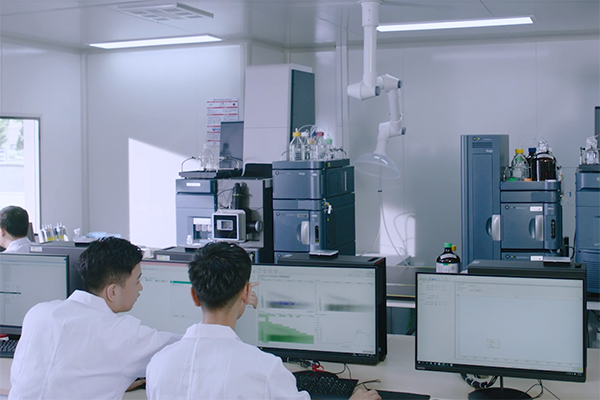
Bionano Irys system | Waters XEVO G2-XS QTOF | QTRAP 6500+

Over 20,000 square feet place
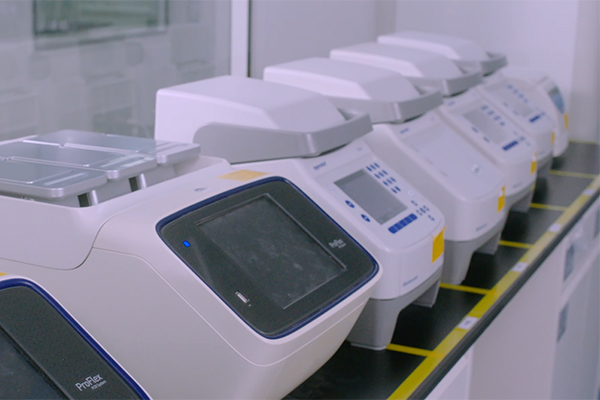
Advanced biomolecular laboratory instruments
Standard labs of sample extraction, library construction, clean rooms, sequencing labs
Standard procedures from sample extraction to sequencing under strict SOPs

Reliable, Ease-to-use On-line Bioinformatic Analysis Platform
Self-developed BMKCloud platform
CPUs with 41,104 memory and 3 PB total storage
4,260 computing cores with peak computing power over 121,708.8 Gflop per second.
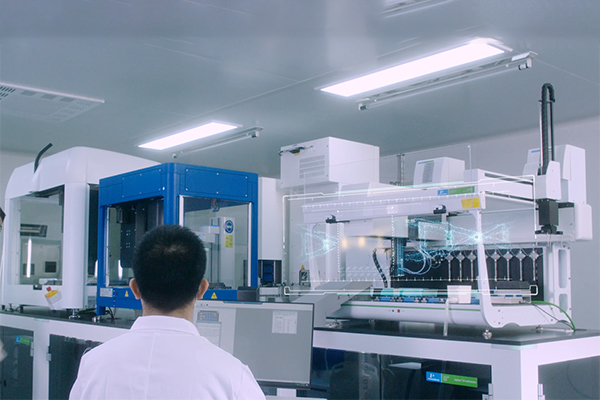
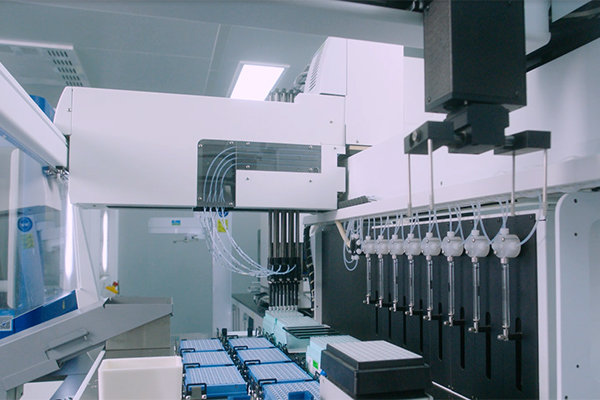
Fully Automated Platform for Next-generation sequencing--Brilliant Lab 1000
Biomarker technologies (BMKGENE) and PerkinElmer have jointly built a fully automated experimental production line, called Brilliant Lab 1000 (BL1000), which is applied to the high-throughput NGS library construction service.
BMKGENE strives to greatly improve the entire line of sequencing products in terms of product types, production line throughput, delivery quality, and cycle time, to provide customers with better sequencing services.
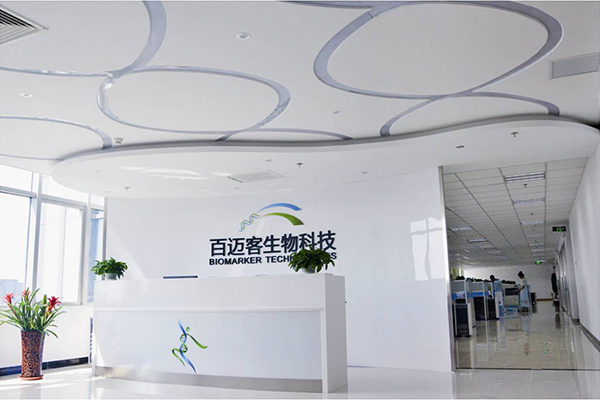
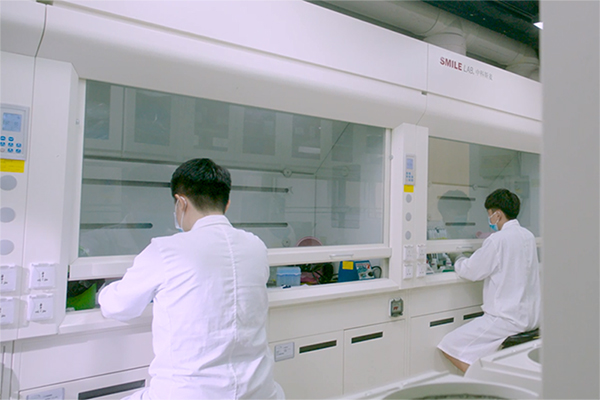
World-Class Smart Sequencing Facilities
Industrialized, automated, and standardized cleanroom infrastructure supporting global genomics projects.



Enterprise Qualification & Authoritative Certifications
Certified excellence backed by ISO accreditations, joint academic laboratories, and proprietary patent portfolios.


Quality Certifications, Patents & Software Copyrights
Demonstrated rigor across ISO standards, bioinformatics pipeline copyrights, and proprietary molecular biology inventions.


Complete Multi-Omics & Sequencing Product Portfolio
Explore our comprehensive product matrix supporting genomics, transcriptomics, metagenomics, and proteomics research projects in Mozambique.