Featured Spatial & Sequencing Solutions
Standardized high-throughput platforms engineered for sample-to-insight genomic content generation.


Spot-Based Spatial Transcriptomics in Genome Sequencing Content Creation
Revolutionizing Spatial Biology through Barcoded Capture Spots, High-Throughput NGS, and Comprehensive Bioinformatic Pipelines.
In the rapidly evolving landscape of modern genomics, Spot-Based Spatial Transcriptomics (ST) has emerged as a cornerstone methodology, seamlessly combining histological tissue context with total transcriptomic profiling. Traditional bulk RNA sequencing provides an averaged expression signature across thousands of heterogeneous cells, masking crucial microenvironmental architectures. Single-cell RNA sequencing (scRNA-seq) resolves cellular heterogeneity but disrupts physical spatial coordinates during tissue dissociation. Spot-based spatial transcriptomics bridges this critical gap by immobilizing tissue sections onto arrays featuring thousands of spatially barcoded capture spots.
For high-throughput genome sequencing content creation, spot-based approaches offer an unprecedented framework to generate multi-dimensional datasets. By capturing polyadenylated mRNA directly from intact tissue sections onto spatially indexed spots (such as those featured in Biomarker Technologies' proprietary BMKMANU S3000 platform), researchers and industrial drug developers can map gene expression landscapes directly back to tissue histology. This high-density spatial data fuels content creation across scientific publishing, biopharmaceutical target discovery, agricultural biotechnology, and clinical diagnostic biomarker validation.
Spatial Barcoding Precision
Each spot contains unique spatial barcodes (Spatial IDs) and Unique Molecular Identifiers (UMIs), allowing precise mapping of mRNA reads back to exact 2D histological coordinates.
Multi-Omics Convergence
Seamlessly integrates with whole-genome sequencing (WGS), full-length PacBio transcriptomics, and proteomics for comprehensive multi-layered cellular profiling.
Automated Scale & Throughput
Driven by ultra-automated NGS library construction lines like the Brilliant Lab 1000 (BL1000), drastically lowering turnaround times and experimental variance.
Commercial and Industrial Status of Spatial Transcriptomics
The commercial landscape for spatial biology is experiencing explosive exponential growth. Global pharmaceutical giants, biotechnology firms, and leading translational research institutes are actively replacing conventional transcriptomic workflows with spatial resolution platforms. Key commercial drivers include:
Accelerated Oncology Drug Discovery
In immuno-oncology, understanding the tumor microenvironment (TME) is vital. Spot-based transcriptomics enables industrial researchers to delineate immune cell infiltration, spatial checkpoint signaling, and drug resistance niches, drastically accelerating target validation.
Standardized Industrial Automation
Industrial scalability requires stringent Quality Control (QC) and automated handling. Joint innovations such as the Brilliant Lab 1000 (BL1000)—co-developed by Biomarker Technologies and PerkinElmer—bring full robotic automation to spatial library preparation and sequencing workflows.
Furthermore, spatial genomics content creation has become a essential asset for bioinformatic platform providers. Generating high-resolution spatial atlases across healthy and diseased tissues provides the foundational training data for Next-Gen AI models, predictive pathology algorithms, and personalized therapeutic development platforms.
In-Depth Application Scenarios Profiling
Exploring how spot-based spatial transcriptomics transforms diverse scientific domains.
1. Tumor Heterogeneity & Microenvironment Deconvolution
Solid tumors exhibit high intra-tumoral heterogeneity. Spot-based spatial transcriptomics permits simultaneous identification of malignant cell subpopulations, stromal compartments, and infiltrating lymphocytes. By co-registering H&E images with spot-specific cDNA libraries, researchers can characterize spatial gradients of hypoxia, angiogenesis markers, and invasive margin expression signatures.
2. Neurobiology & Brain Architecture Atlas Construction
The central nervous system depends heavily on defined laminar and anatomical organization. Spatial transcriptomics allows full-length and short-read sequencing of cerebral cortex layers, hippocampus subregions, and spinal cord sections, providing localized spatial gene expression profiles during neurodegenerative disease progression such as Alzheimer's and Parkinson's.
3. Plant Pathology & Agricultural Biotechnology
Understanding host-pathogen interactions in crops requires precise tissue localization. Spot-based spatial transcriptomics enables crop genomicists to evaluate gene activity at infection sites, vascular bundles, and stomatal tissues under abiotic and biotic stress, accelerating marker-assisted breeding and genetic modification programs.
4. Regenerative Medicine & Organoid Quality Control
As tissue engineering advances, 3D organoid structures require validation against native organ architectures. Spatial RNA-seq verifies cell type stratification, lineage differentiation pathways, and extracellular matrix remodeling within synthetic or regenerated tissue constructs.
Future Trends: Convergence of AI, Cloud Compute, and Long-Read Sequencing
The future of spot-based spatial transcriptome content creation lies at the nexus of high-density arrays, long-read sequencing technologies (PacBio / Nanopore), and high-performance AI computational clouds.
1. Sub-Cellular Spot Resolution Evolution: Continuous miniaturization of spot pitch and diameter is pushing spatial arrays toward single-cell and sub-cellular resolution, eliminating cellular mixing within single capture spots.
2. Integration with Full-Length Isoform Sequencing: Combining spot-based spatial arrays with PacBio full-length mRNA cDNA synthesis enables spatial isoform profiling, uncovering localized alternative splicing events across tissue boundaries.
3. AI-Powered Bioinformatic Cloud Platforms: Managing massive spatial sequencing datasets requires enterprise-grade compute power. The BMKCloud bioinformatics platform provides automated spatial data pipelines, GPU-accelerated image alignment, interactive 3D spatial tissue visualization, and big-data storage infrastructure.
About Biomarker Technologies (BMKGene)
Sixteen years of continuous innovation in high-throughput sequencing and multi-omics services.
Biomarker Technologies (BMKGene), founded in 2009, is a leading global genomics service provider with over 16 years of continuous innovation in high-throughput sequencing and bioinformatics. Backed by more than 60 national invention patents and 200+ software copyrights, we deliver comprehensive multi-omics solutions—spanning genomics, metagenomics, epigenetics, single-cell omics, transcriptomics, and our proprietary BMKMANU S3000 spatial transcriptome technology—supported by our advanced BMKCloud bioinformatics platform. We have established long-term collaborations with organizations across 84 regions worldwide, providing reliable genomic solutions on a global scale.

Leading Sequencing Platforms
PacBio platforms: Sequel II, Sequel, RSII
Nanopore platforms: PromethION P48, GridION X5 MinION
10X Genomics: 10X ChromiumX, 10X Chromium Controller
Illumina platforms: NovaSeq
BGI-sequencing platforms: DNBSEQ-G400, DNBSEQ-T7
Bionano Irys system
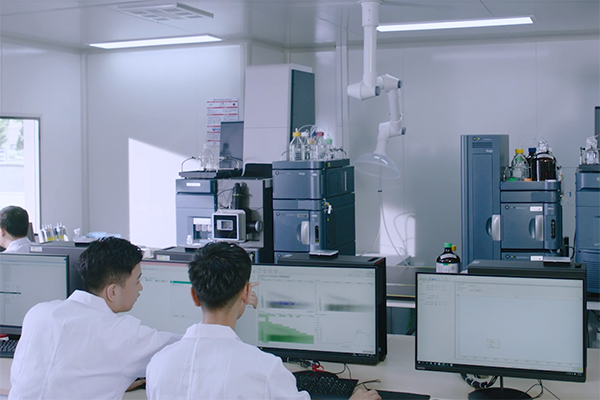
Waters XEVO G2-XS QTOF | QTRAP 6500+

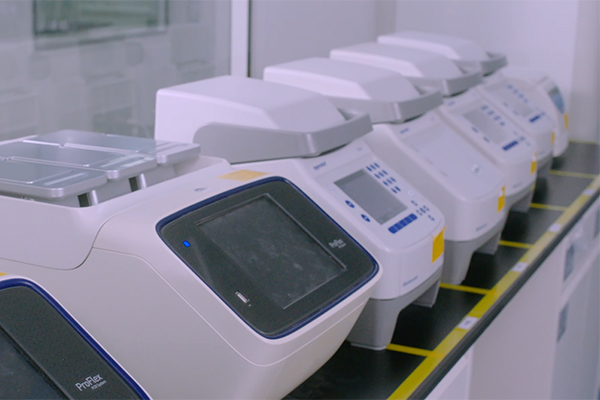
20,000+ Sq. Ft. Automated Labs
Advanced biomolecular laboratory instruments.
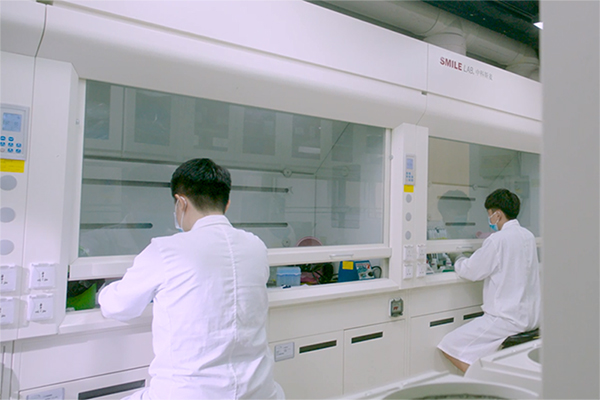
Standardized laboratories for sample extraction, library construction, clean rooms, and sequencing operational under strict SOPs.

BMKCloud Bioinformatic Platform
Self-developed BMKCloud computing infrastructure.
CPUs with 41,104 memory, 3 PB total storage capacity, 4,260 computing cores with peak compute power exceeding 121,708.8 Gflop/s.
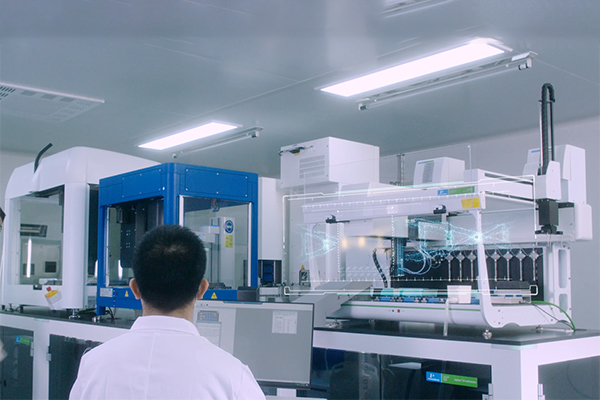
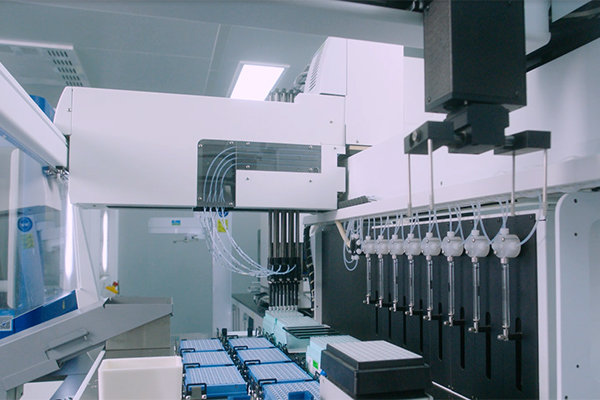
Brilliant Lab 1000 (BL1000) High-Throughput Automation
Jointly built by Biomarker Technologies and PerkinElmer for automated NGS library construction.
Fully Automated Platform for Next-Generation Sequencing
Biomarker technologies (BMKGENE) and PerkinElmer have jointly built a fully automated experimental production line, called Brilliant Lab 1000 (BL1000), which is applied to high-throughput NGS library construction services.
BMKGENE strives to greatly improve the entire line of sequencing products in terms of product types, production line throughput, delivery quality, and cycle time, providing global researchers with superior spatial and genomic sequencing services.




Enterprise Qualifications & Intellectual Patents
Internationally certified operations backed by extensive proprietary patent portfolios.


Complete Portfolio for Spatial & Next-Generation Genomics
Comprehensive multi-omics reagents, platforms, and bioinformatic pipelines.